BlackLine vs Workiva: Which Is Better for Finance Teams?
TL; DR
BlackLine helps teams manage month-end close. Workiva helps teams build accurate, audit-ready reports. But most problems start earlier, in reconciliation. Osfin focuses there, helping teams match data faster, handle complexity, and reduce errors before close and reporting begin.
Finance work has changed quite a lot over the years. Teams now deal with tighter deadlines, higher data volumes, and stricter audit checks. And old and sluggish manual processes are things of the past.
So, in search of better tools to automate finance, two names come up often: BlackLine and Workiva.
Both platforms support finance operations. Both reduce manual effort. Both bring more structure to how teams manage data. But they focus on different parts of the workflow.
BlackLine centers on the financial close. It helps teams manage reconciliations, journal entries, and close tasks with clear controls. Workiva focuses on reporting and collaboration. It connects data across documents and supports audit-ready filings.
This difference often creates confusion as to which platform fits your team better.
To help you out, we have compared Workiva vs BlackLine, focusing on their offerings, shortcomings, and if there is a better alternative.
What is Blackline
BlackLine is a cloud accounting software. It automates the financial close process, things like account reconciliations, journal entries, and variance analysis. Accountants use it to replace manual spreadsheet work and reduce errors at month-end. BlackLine is built for mid-size to large companies and integrates with ERP systems like SAP and Oracle.
What is Workiva
Workiva is used for financial reporting and compliance. It helps teams collect data, connect it across documents, and produce reports that are ready for audit and filing.
Teams use it to create reports like annual filings, ESG reports, and internal financial documents.
It also supports collaboration as it lets several teams work on the same report, track changes, and maintain a clear audit trail.
BlackLine vs Workiva vs Osfin
In a hurry? Take a look at this brief comparison table that highlights what is the difference between BlackLine vs Workiva and how they both differ from Osfin, an enterprise-grade reconciliation engine.
{{banner1}}
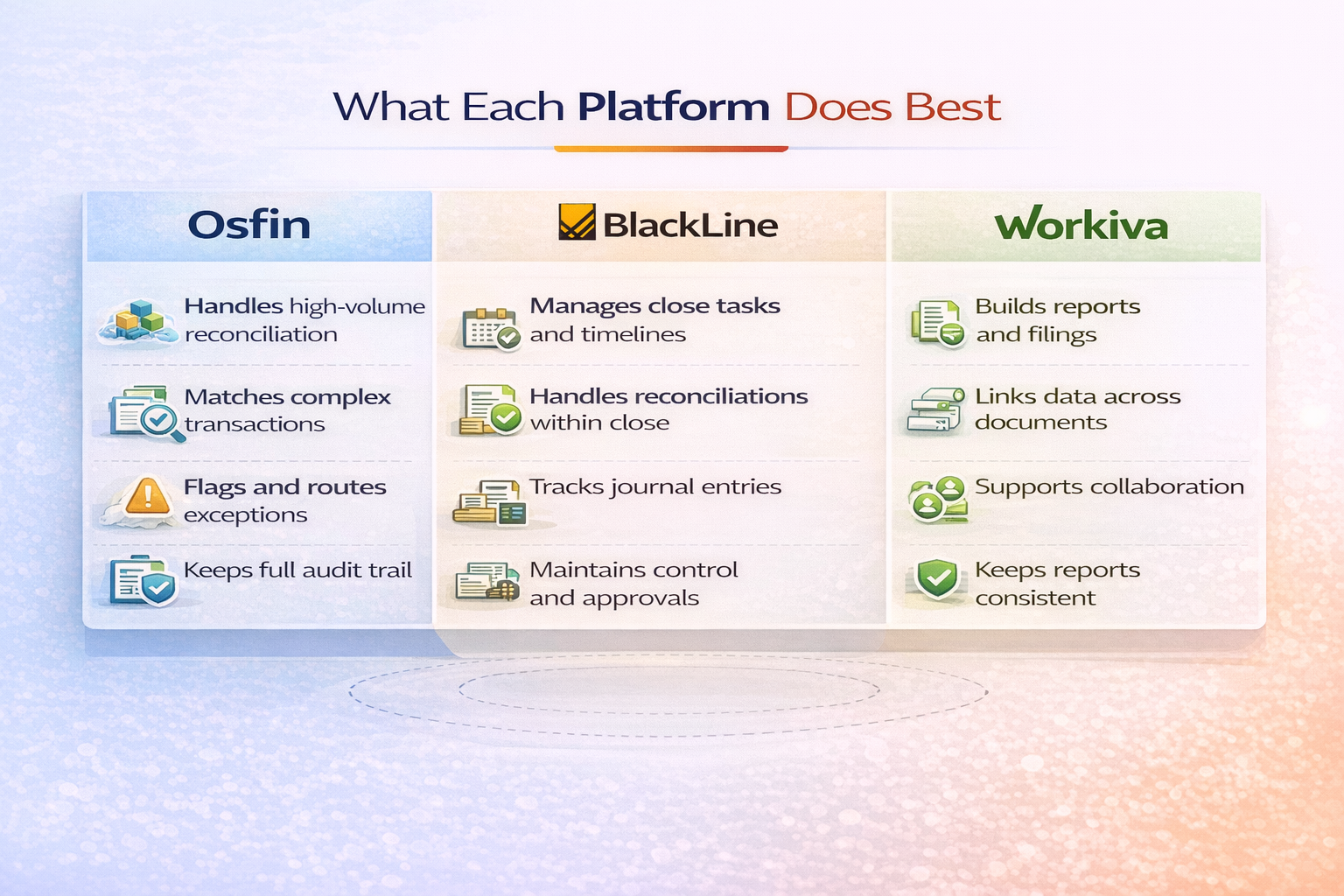
BlackLine vs Workiva Comparison
Here, we dive into a detailed breakdown of differences between BlackLine vs Workiva.
BlackLine

BlackLine focuses on helping teams manage reconciliations, track close tasks, and handle journal entries in a structured way. What really sets it apart is control. Every step in the close is tracked, every change is recorded, and teams always have a clear audit trail to rely on.
Key features
- Automated account reconciliations.
- Transaction matching using rules.
- Journal entry creation and approval workflows.
- Close task tracking with deadlines and ownership.
- Real-time dashboards for status and exceptions.
- Audit trail with full history of changes.
- Intercompany transaction management.
- Alerts for delays and unmatched items.
Pros
- Brings strong structure to the close process.
- Reduces manual work and spreadsheet dependency.
- Improves visibility across tasks and teams.
- Helps teams close faster and stay audit-ready.
- Strong integration with ERP systems like SAP.
Cons
- Setup can take time, especially for large teams.
- Can feel heavy or complex at the start.
- Higher cost for smaller organizations.
- Some users report performance or data handling limits at scale.
Integration
BlackLine connects with major ERP systems like SAP, Oracle, NetSuite, and Microsoft Dynamics.
It uses APIs and built-in connectors to pull data into one place. This removes manual uploads and keeps systems in sync.
Customer reviews
Users on platforms like G2 often praise BlackLine for its deep automation and integrations. Its user-friendly interface is also highlighted by several users.
However, some users complain about the long implementation time, a steep learning curve, and feature overload.
User interface
The interface is structured and task-driven. Dashboards show what is pending, overdue, or complete. Teams can move through reconciliations and tasks step by step.
Some users find it intuitive after onboarding. Others feel it looks dense at first, mainly because of the number of features and modules.
{{banner1.1}}
Workiva
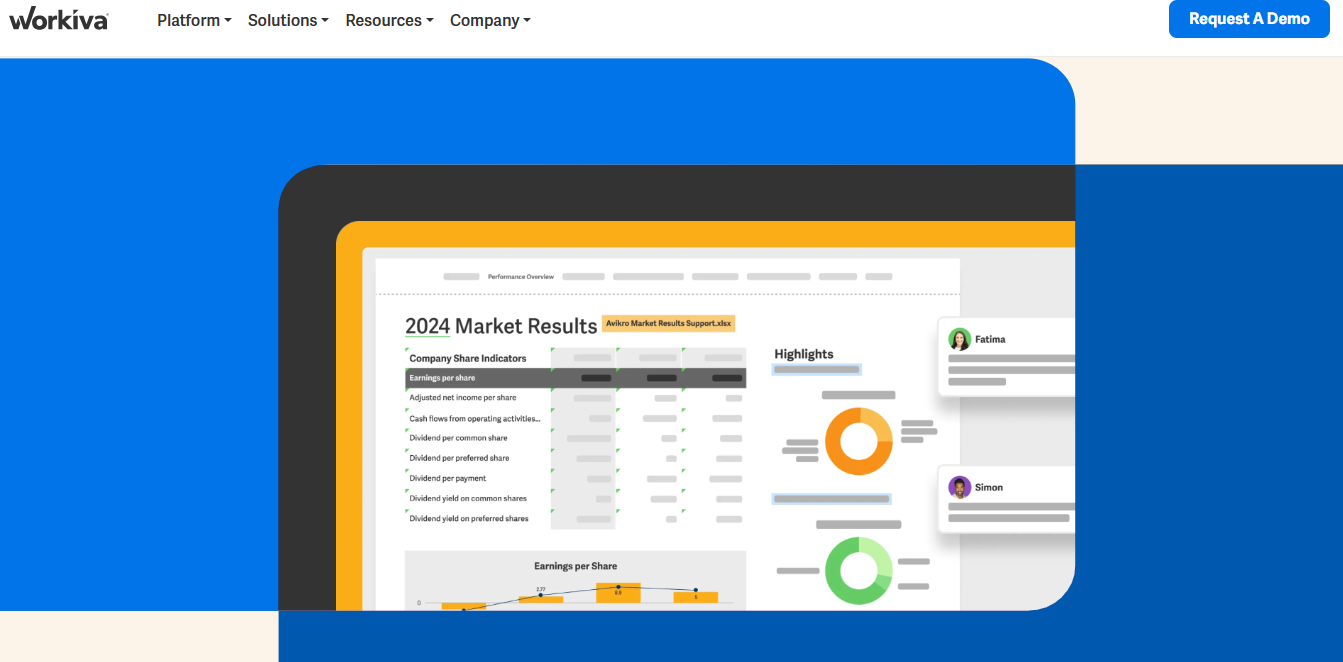
Workiva is built for reporting and compliance. It helps finance teams integrate data from different systems and turn them into clear, connected reports. These can be annual financial reports, regulatory filings, or internal documents.
Key features
- Linked data across reports and documents.
- Real-time updates when numbers change.
- Collaboration across teams on the same file.
- Built-in audit trail for every edit.
- Support for regulatory filings like SEC and XBRL.
- Dashboards and reporting views.
- Role-based access and permissions.
- Export to formats like Excel, PDF, and XBRL.
Pros
- Reduces manual updates across documents.
- Strong collaboration across finance, audit, and legal teams.
- Keeps reports consistent with linked data.
- Good for complex reporting like regulatory filings.
- User-friendly for most reporting tasks.
Cons
- Setup can take time and may need a dedicated team.
- Some users report slow performance in large files.
- Limited spreadsheet functionality compared to Excel.
- Can feel restrictive for advanced data handling.
Integration
Workiva connects with ERP systems, accounting tools, and other data sources. It offers dozens of built-in connectors for tools like SAP, Oracle, Workday, Salesforce, and Microsoft systems.
If a direct connector is not available, Workiva still lets you connect through APIs or file transfers.
Customer reviews
Most users like how Workiva reduces manual reporting work.
A common highlight is data linking. Teams save hours by updating numbers once and seeing changes flow across documents.
Users also point out a few challenges. There is an initial learning curve, especially during setup. Some teams report slower performance during peak periods. A few users mention that spreadsheet features feel limited compared to Excel. Pricing is another concern for some teams, especially smaller companies with simple reporting needs.
User interface
The interface is clean and built around documents and reports. It feels familiar to teams used to Word and Excel, which helps adoption.
However, many users find it less intuitive and say it can feel slow or slightly limited when working with large files or complex tables.
Why consider Osfin over BlackLine and Workiva
BlackLine and Workiva both play important roles in finance. BlackLine helps teams manage the close with control and structure. Workiva helps teams turn numbers into clear, compliant reports.
But there is a step that comes before both of these.
Reconciliation.
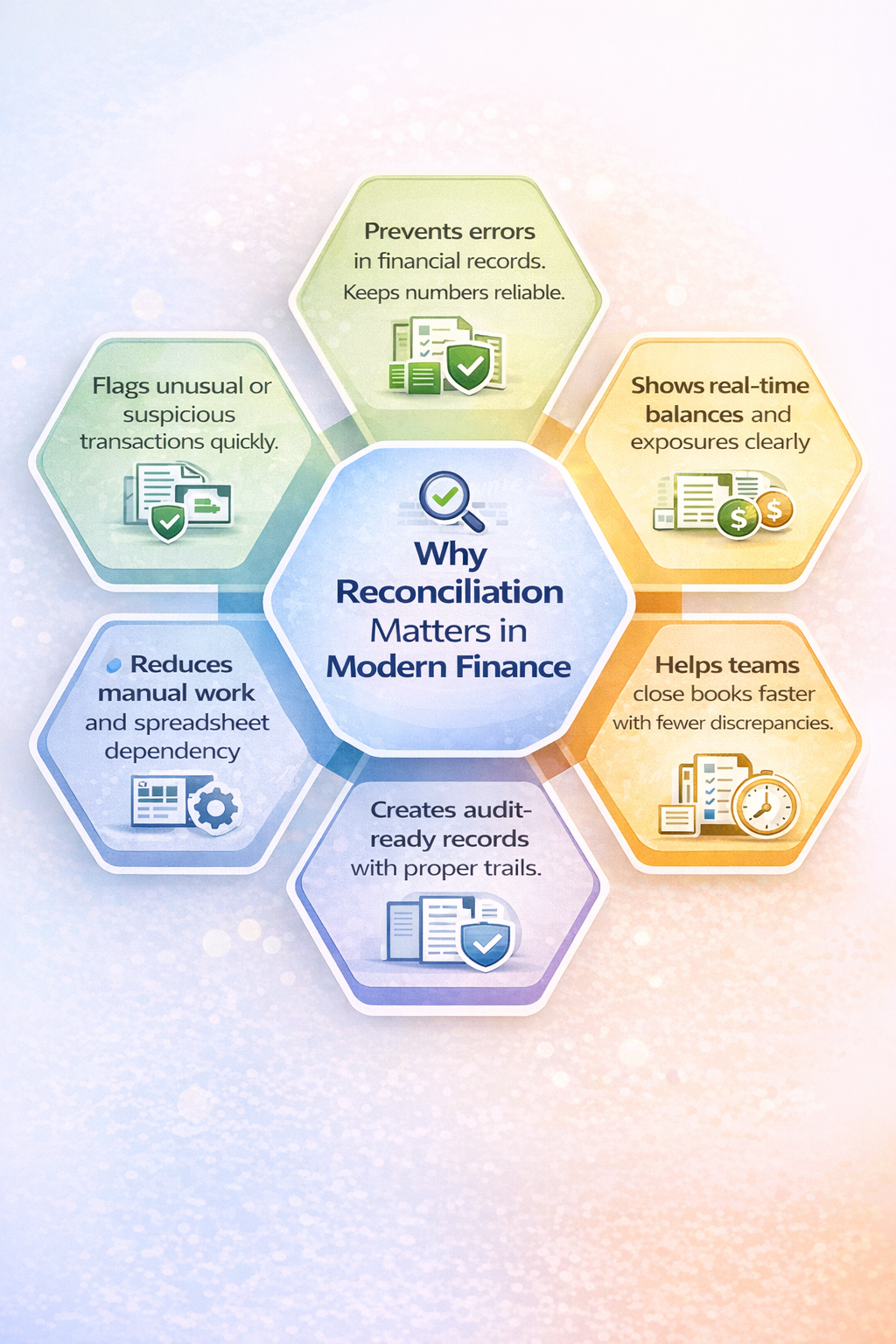
This is where finance teams spend a large part of their time. It is also where errors appear, delays build up, and audit pressure increases. If this step breaks down, everything that follows becomes harder.
Osfin focuses entirely on this layer. It is designed to handle large volumes of financial data, match transactions accurately, and keep everything traceable from start to finish.
1. Importing data (ingestion)
Osfin doesn’t force teams to clean or reformat data before getting started. It accepts data in almost any format and connects with 170+ sources, including ERPs, CBS, and payment systems.
While the data comes in, the platform filters out inconsistencies using custom tolerances. It also catches duplicates and unusual entries early, so issues don’t carry forward into reconciliation.
2. Reconciliation process
Matching isn’t always straightforward, and Osfin is built with that in mind.
It handles many-to-one, one-to-many, and even multi-way reconciliations, whether that’s two-way or up to five-way matching, without requiring complex rule setups.
It’s also built for scale. Teams can process up to 30 million records in around 15 minutes, which can significantly shorten reconciliation timelines.
For payment data, Osfin automatically accounts for commissions, taxes, and fees. No need to break those out manually.
3. Exception handling
Unmatched transactions are identified automatically, along with clear reasons for why they didn’t match.
From there, Osfin routes each item to the right person through its built-in ticketing system. Escalations happen within the platform, so teams don’t have to rely on email threads or manual follow-ups.
Live dashboards show what’s matched, what’s pending, and where the risks are. That visibility helps teams move faster and stay aligned.
4. Output
Once reconciliation is done, reports are generated with full transaction history and traceability.
Teams can see how each record was processed, from ingestion to final outcome. This makes audits more straightforward and reduces last-minute effort.
Security is built in through role-based access, maker-checker workflows, and two-factor authentication. Data is encrypted, and the platform aligns with standards like SOC 2, PCI DSS, ISO 27001, and GDPR.
Where Osfin stands out
Osfin is a strong fit for teams that:
- Focus heavily on reconciliation accuracy and speed
- Want quicker setup without long implementation cycles
- Handle large volumes of financial data daily
- Deal with complex matching scenarios across multiple systems
- Need clear audit trails at all times
- Operate in regulated environments with strict compliance needs
- Prefer a focused platform over broad, multi-module systems
If reconciliation is slowing down your close or increasing audit pressure, a specialized platform like Osfin addresses that problem directly.
{{banner3}}
FAQs
1. What is the difference between BlackLine and Workiva?
BlackLine focuses on closing the books and managing accounting tasks. Workiva focuses on reporting and compliance. One prepares the numbers. The other helps present them in reports.
2. Where does Osfin fit compared to BlackLine and Workiva?
Osfin focuses on reconciliation. It handles large volumes, complex matching, and exception tracking. It fits before the close and reporting stages, where clean and accurate data is most important.
3. Which platform is easier to implement?
Workiva and BlackLine can take time to set up, depending on scope. Osfin is quicker to deploy for reconciliation use cases since it focuses on one core function.
4. How important is audit readiness in these tools?
Audit readiness is critical. All three platforms support audit trails. BlackLine focuses on control during close. Workiva supports audit-ready reporting. Osfin ensures complete traceability during reconciliation.