Osfin vs Duco: Which Financial Reconciliation Platform Is Best for You?
Are you looking for reconciliation software and have narrowed down your options to Osfin and Duco? Before you take that final plunge, it's important to compare the two thoroughly. Why? So you don't have to deal with unexpected complications later.
Osfin is an AI-powered platform that automates and simplifies reconciliation. It boasts 100% accuracy and high speed. Duco, on the other hand, is a rule-based solution that helps businesses manage data reconciliation across different industries.
Let's look at a detailed comparison of Osfin vs Duco so you can select the right tool with confidence.
What is Osfin?
Osfin is an AI tool that takes care of repetitive and error-prone financial tasks. It saves your finance team time, so they can focus on more important work. With integrations tailored for your business, Osfin reduces revenue leakages and improves productivity. It makes managing finances easier, more reliable, and accurate, helping you make confident decisions.
Businesses across industries trust Osfin. It is known for its smart and secure automation. It also follows strict global standards to keep your data safe and confidential. These include:
- AICPA SOC 2 compliance that ensures strong security, availability, and data integrity.
- GDPR compliance that helps you meet European privacy laws.
- ISO 27001 certification for robust information security management.
- 256-bit encryption to secure sensitive information.
- PCI DSS and PCI SSF compliance for secure payment data handling.
{{banner1}}
What is Duco?
Duco is a cloud-based platform that helps large organizations and financial institutions manage high volumes of data. It works on a rule-based system. This means you can set your own rules for how data should be matched and checked. It also automates the end-to-end reconciliation process, including matching transactions, finding differences, and helping you fix them quickly.
One of the standout features of Duco is that it's a no-code platform. This means you don't need technical skills to get started. You can easily set up and run reconciliations without depending on IT support.
The system also uses AI to detect discrepancies. This lets you spend more time reviewing exceptions instead of wading through a sea of data manually.
Osfin vs Duco
Let's look at these differences in detail.
Osfin vs Duco Comparison
Both Osfin and Duco are promising tools. But to select the best option for your business, you need to understand the difference between Osfin vs Duco. Here's a thorough breakdown to help you make the right choice:
1. Osfin
Osfin is an AI-powered platform that simplifies financial operations. It handles time-consuming tasks such as matching transactions, identifying errors, and processing invoices. This saves you hours of manual work and lets you focus on the more important things.
Moreover, with Osfin, you get a clear view of your cash flow and full control over your financial data. And since the system works without fixed templates, it's a lot more flexible for different business needs. It also connects easily with your existing systems through tailored integrations.
Pros:
- 100% Accuracy: Osfin uses AI to match transactions with complete accuracy. It helps reduce human errors and can spot irregularities early. This means you can act before small issues turn into bigger problems.
- Smooth Integrations: The platform connects easily with over 170 systems. Its low-code setup lets you link your existing tools without heavy IT support.
- Easy to Use: Osfin features a clean and modern interface. This makes it simple for anyone to navigate. Your team can start using it right away without a long learning curve.
- Fast Setup: Osfin can be set up in just a week or two. This helps you see results quickly and without major disruptions.
- Scalable: Doesn't matter if you're running a small startup or managing a large enterprise. Osfin adapts to different team sizes and needs without any extra setup requirements.
- Collaboration: You can communicate, assign tasks, and share files directly within the platform. This ensures everyone is on the same page.
- Compliance: Osfin maintains detailed audit trails and access controls. This helps you stay compliant without extra effort.
Features:
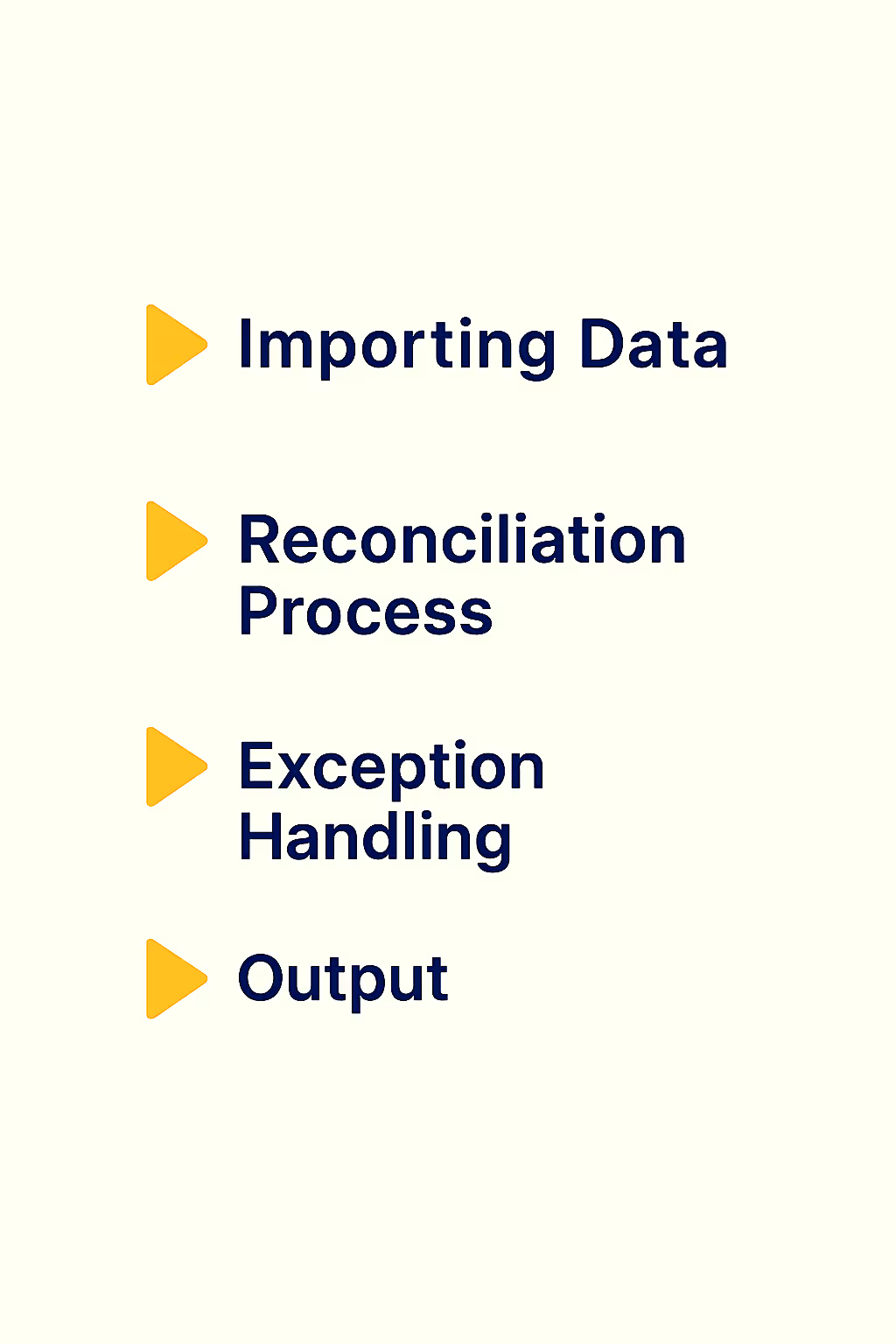
- Importing Data (Ingestion)
Osfin can ingest data from over 170 systems, regardless of file type or format. It applies custom tolerance levels during data import to filter out poor-quality entries before reconciliation begins. The system also detects duplicates and outliers at the point of ingestion, preventing errors later.
- Reconciliation Process
Osfin uses logic-based matching to handle all types of transactions - whether it's one-to-one, one-to-many, or many-to-one. It can process up to 30 million records in just 15 minutes. The platform also auto-reconciles payment gateway reports, including commission, tax, and fee breakdowns, saving hours of manual work.
- Exception Handling
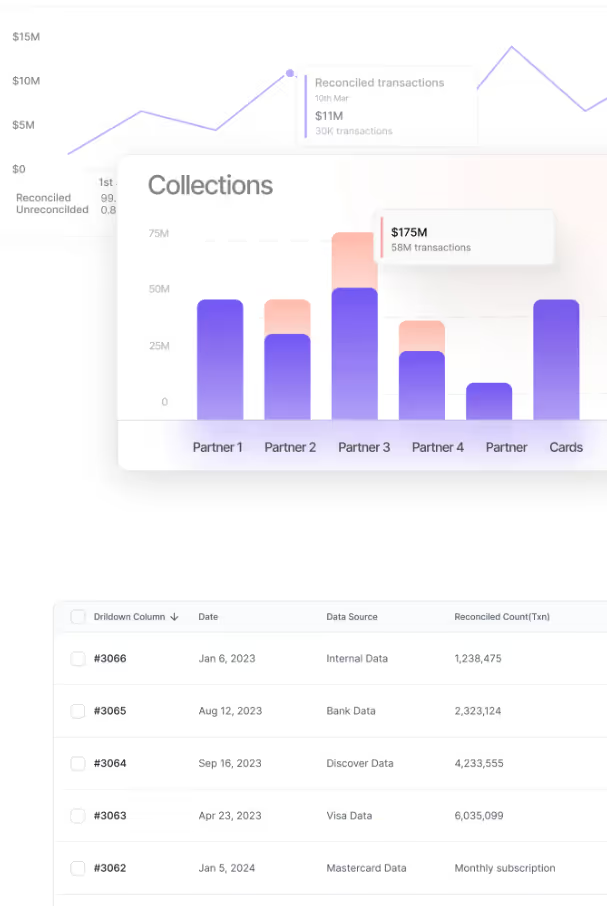
The system automatically flags unmatched transactions along with the reason. It then routes these exceptions to the right team member through its built-in ticketing engine. You can track progress through live dashboards showing match status, exposure, and pending exceptions.
- Output
Osfin generates detailed compliance reports and keeps audit-ready workflows with full transaction history. All data is protected with 256-bit encryption, role-based access, and two-factor authentication. The platform is also compliant with SOC 2, PCI DSS, ISO 27001, and GDPR standards.
Integrations:
Osfin offers more than 170 low-code integration connectors that make connecting systems quick and simple. It integrates smoothly with popular ERPs such as NetSuite, QuickBooks, and Xero. These integrations help bring data together for ingestion, reconciliation, and reporting without needing complex setup.
Reviews Summary:
Many of Osfin's users have shared positive feedback about their experience with the platform. They appreciate its accuracy, speed, and ability to process large volumes of financial data with ease. Here's what they have to say:
- "Managing voluminous transaction data has become seamless using Osfin. We are able to achieve complete visibility on the cash flows across our Internal database, payment gateways, and banks. Moreover, Osfin also became our de facto auditor for PG charges and failure rates."
- "Osfin is a lifesaver. With its support, we've been able to better administer payments to our partners. Timely settlement and distribution of payouts allow us to concentrate on expanding our primary business. For handling partner compensation or commissions, I can't speak highly enough about Osfin. "
- Osfin offers efficient financial reconciliation, enhancing accuracy and productivity. Recommended to decrease dependency on the internal team."
- "Real-time visibility of cash flows at an SKU level is achieved with Osfin's intuitive dashboards. We were able to not only manage the customer transaction level but also the complex recon of state-wise charges and taxes for our B2B business."
{{banner1.1}}
User Interface:
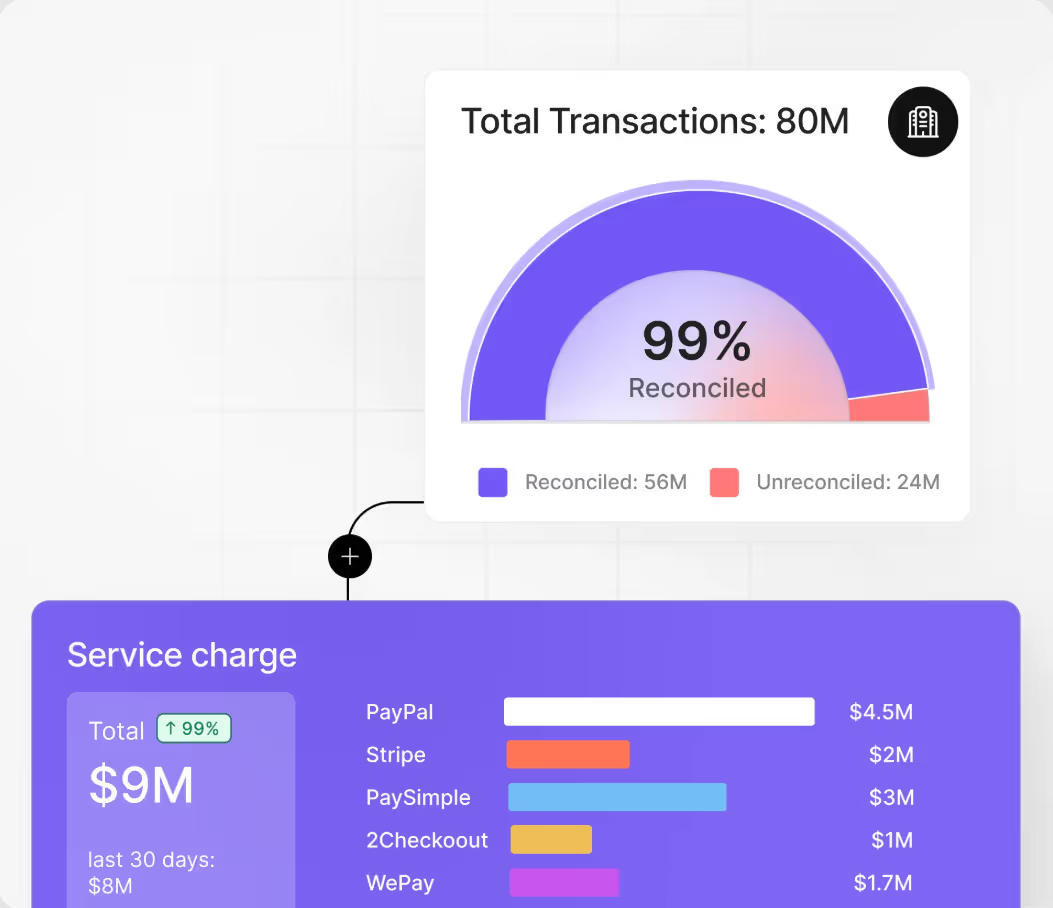
Osfin has a clean and modern interface that is simple and easy to use. This means you can get started quickly, with minimal learning. The system supports intuitive cross-team collaboration with features like integrated comments, notifications, and audit trails. This keeps everyone on the same page while working on reconciliations.
Osfin also works well with various financial operations, including wallets, FBO accounts, real-time payment systems, and APIs. Plus, it has a cloud-based, file-agnostic design that makes it easier to adapt to evolving business and banking needs.
Dashboard image:
2. Duco
Duco is a cloud-based platform for businesses and financial institutions. It helps manage large amounts of data and matches transactions using a rule-based system. The system automates most reconciliation work, reducing manual work and improving accuracy.
It uses AI and custom rules to find mismatches, so teams can focus on solving exceptions instead of routine tasks. Plus, Duco is a no-code platform. This means you don't need technical knowledge to use it.
Pros:
- It's a no-code platform, so non-technical staff can use it easily.
- Custom rules let you match transactions according to your business needs.
- Real-time data validation and exception.
- The platform is scalable and can handle complex reconciliations across multiple financial systems.
- Integrates well with different accounting and ERP systems.
Cons:
- Fewer advanced features for broader financial management.
- Complex setup for smaller businesses with simpler needs.
- Mostly focuses on rule-based reconciliation and lacks deeper analytics or financial close tools.
Features:
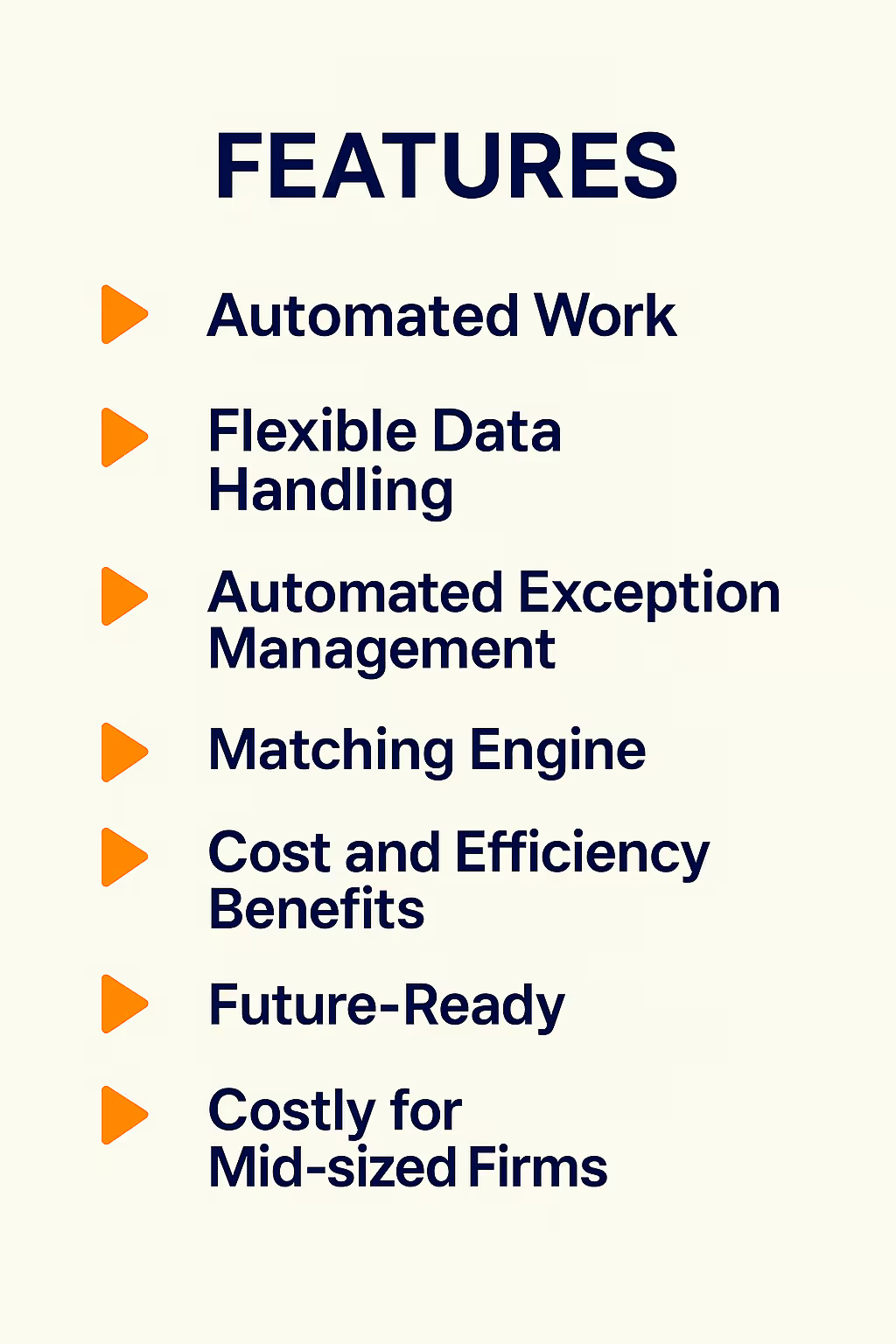
- Automated Work: The platform uses AI to handle repetitive tasks like extracting unstructured data, matching fields, and labelling exceptions.
- Flexible Data Handling: Duco can work with any type of data - CSV, ISO files, PDFs, emails, or images - without needing manual extraction or extra tools.
- Automated Exception Management: Exceptions are automatically labelled, commented on, and assigned for review.
- Matching Engine: It offers high match rates, fuzzy matching, and user-managed tolerances.
- Cost and Efficiency Benefits: Replacing legacy solutions helps reduce costs and save time across reconciliation processes.
- Future-Ready: Duco is cloud-native and secure, with continuous updates and new features built in.
Integrations:
Duco connects easily with both internal and external systems. It works well with downstream tools, such as reporting platforms. These integrations help you maintain data consistency and reduce the need for manual transfers.
Reviews Summary:
Duco's customers generally find the platform useful for handling large volumes of financial and banking data. However, they also highlight some limitations. Here's what they say:
- "My experience with the platform has been mostly positive. It helps take the hassle out of data checks, and I spend less time fixing errors manually. There's a bit of a learning curve, but it has made my daily tasks smoother overall."
- "The matching process is mostly automated, so I don't have to comb through spreadsheets. The interface is pretty clean and lets me see issues quickly. I also appreciate the email notifications when something needs my attention, which helps me stay on top of things."
- "Duco is a great vendor that continues to deliver incremental value to the business as the platform is adopted by the business. Vendor has been incredibly supportive with training and support."
User Interface:
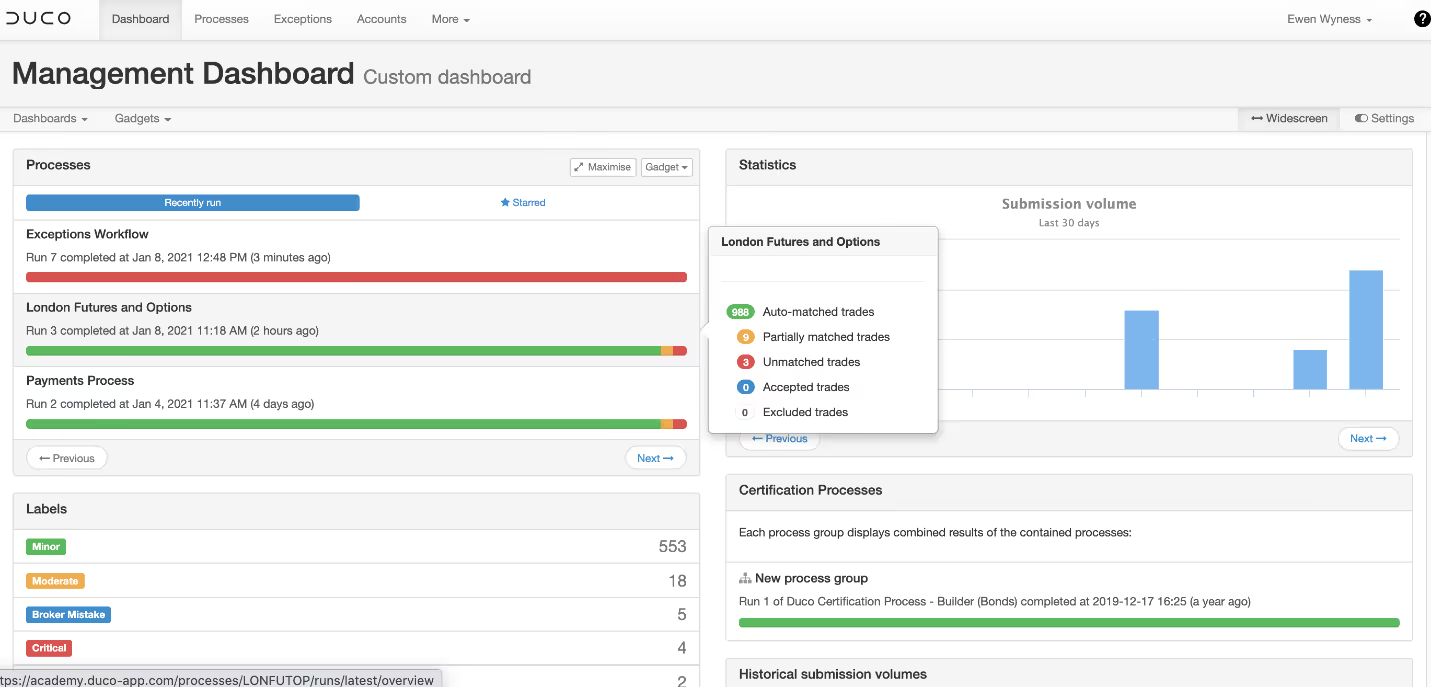
Duco offers a user-friendly interface that makes handling large amounts of data easier. It balances powerful features with simplicity, so you can work efficiently without feeling overwhelmed. Even complex processes are easier to follow, making it accessible for technical as well as non-technical users.
Dashboard Image:
Why Consider Osfin Compared to Duco?
When comparing Osfin to Duco, Osfin stands out for several reasons:
- It uses advanced AI to reconcile large volumes of transactions in minutes. Plus, it offers 100% accuracy, reducing errors.
- The no-code interface is simple and intuitive. It can be customized quickly, so you can start using the system without long training or complex setup.
- Osfin can be deployed in a short time. You also get dedicated support through setup, making the adoption process smooth.
- Osfin offers a more affordable alternative to high-end reconciliation software. This makes it a great option for businesses with limited budgets.
- The platform meets top industry standards for security and compliance, providing peace of mind when handling sensitive financial data.
Book a demo today to see why Osfin should be your preferred choice.
FAQs on Osfin vs Duco
1. What is the difference between Osfin vs Duco?
Osfin is an AI-powered platform that automates reconciliation with high speed and accuracy. Duco is a rule-based platform focused on matching transactions using custom rules. Osfin handles large volumes of transactions quickly and offers full automation, while Duco relies more on manual setup and rule management.
2. Why is Osfin better than Duco?
Osfin is faster, more accurate, and easier to use. Its no-code interface is simple for all team members, even non-technical employees. Plus, it is more affordable for businesses with limited budgets and also meets top security and compliance standards.
3. What are the key features of Osfin?
Some key features of Osfin include over 170 integrations, duplicate detection, logic-based matching, and auto-reconciliation of payment reports. It can also flag unmatched transactions, assign reasons, and route them to the right team member.
4. Can Osfin integrate with ERP systems?
Yes. Osfin works smoothly with popular ERPs like NetSuite, QuickBooks, and Xero.