Best Invoice Reconciliation Software in 2026 (Top 10 Tools Compared)
TL; DR
- Balancing accounts is a key component in a business, but it is also a complex task. Making mistakes can lead to inaccurate financial planning and cause a cash flow crunch.
- Collecting invoices, recording line items, matching them with internal PO data and making reports of the process entails the whole cycle of invoice reconciliation. Manually performing these tasks is time-consuming.
- An organization can benefit from adopting an invoice reconciliation tool that can automate the whole process. It saves time and reduces errors that are common in accounts balancing.
A business’s accounts give insight into its financial position. To make the best out of them, all the credits and debits have to be properly balanced. This is also important for compliance with legal and tax regulations.
Accounts payable is one of the tasks involved in balancing accounts. It is a cyclic work that consists of receiving invoices from vendors, making payments to them and then recording the transaction in the general ledger of the business. Reconciling these invoices is a complicated task and is prone to human errors. Therefore, we now have invoice reconciliation software that has automated the whole process and reduced manual work. In this article, we look into the benefits of using these tools, how they should be evaluated and which one will serve your business the best.
Are you ready to automate your financial workflows? Check out Osfin, which offers a tailored solution for all your business needs.
What is Invoice Reconciliation Software
Invoice reconciliation software automates the task of matching vendor invoice data, such as total charges, taxes, and invoice numbers, with purchase order and payment records. This helps accounts teams track their liabilities and obtain approvals for timely vendor payments. This helps with better cash flow management and resource planning. Invoice reconciliation involves the following steps:
- Ingesting data from invoices and internal records
- Standardizing different formats of data for matching purposes.
- Finding outliers and duplicates for manual handling
- Reconciling invoice data with business data and updating payment records
- Getting approvals and making reports for audit purposes
How We Evaluated Top Invoice Reconciliation Software
Many businesses do manual invoice reconciliations. It is time-consuming and error-prone, which can affect a business’s ability to plan its finances effectively. We evaluated different invoice automation software and chose those that best ease the burden of accounts teams.
Our evaluation criteria considered the following:
- The ability to integrate with the existing accounts system
- Reduction in redundant and error-prone tasks
- Difficulties with the implementation
Key Features to Look for in Invoice Reconciliation Software
Any business would want to avoid mistakes when selecting software for invoice reconciliation. Therefore, we made a list of key features to look for in invoice reconciliation software:
- Import data from multiple resources: Businesses deal with many formats of data stores in different places. A comprehensive tool for invoice reconciliation should be able to import data from all these sources and scan vendor invoices for matching.
- Perform multi-way matching: A tool for invoice reconciliation is only effective if it can automatically do logic-based multi-way reconciliations like 3-way, 4-way and 5-way.
- Detects outliers: Invoice reconciliation software helps detect fraud and duplicates, which are then directed to appropriate personnel for handling.
- ERP integration: It should integrate easily with your ERP and other systems to keep invoice data in sync with bank statements and purchase orders.
- Provide audit trails: Businesses need to keep their account balances audit-ready. An invoice reconciliation tool should help the accounts team easily navigate invoice data and give reports on accounts activity.
Benefits of Using an Invoice Reconciliation Software
A business not only eases its accounts team workload by adopting software for invoice reconciliation but also reaps many other benefits. These are-
- Reduction in manual work: With automated invoice capturing and transaction matching, AP teams save time on manually doing these tasks.
- Better cash flow management: Effective financial planning becomes possible when a business’s balances are promptly matched with invoices and discrepancies are automatically resolved. This enhances their cash flow management by giving them better insight into their finances.
- Fraud prevention: Duplicates and anomalies are easily tracked by invoice reconciliation software and routed to the AP team for handling. This effectively helps prevent fraud, which could result in huge losses.
- Audit-ready workflow: Compliance is an important aspect of balancing accounts. It is difficult to keep track of the entire activity log for the invoice-matching process when done manually. Thus, invoice reconciliation tools give complete transaction traceability, which supports audits and regulatory compliance.
Top 10 Invoice Reconciliation Software
The table below consists of a list of the best reconciliation software to help you decide which one to incorporate in your business.
To help you better understand these software, here’s a detailed review with their pros and cons
1. Coupa

Coupa is an AI-native platform that focuses on business spend management. It helps businesses gain visibility into cash flow and make cost-saving decisions with AI-driven recommendations. Coupa’s “Compliance-as-a-service” feature makes compliance easy by handling e-invoicing mandates and global tax regulations across 50+ countries.
Pros
- Performs 2-way and 3-way reconciliation
- Automated validation using predefined rules
- Identifies discrepancies in prices, quantity, tax and routes them to the appropriate user
Cons
- High licensing cost for small organizations
- Confusing UI with a steep learning curve
- Vendors face difficulty submitting invoices
Price: free, 549 USD/per year, 499+ USD/per year, 4800 USD/per year
2. Concur invoice
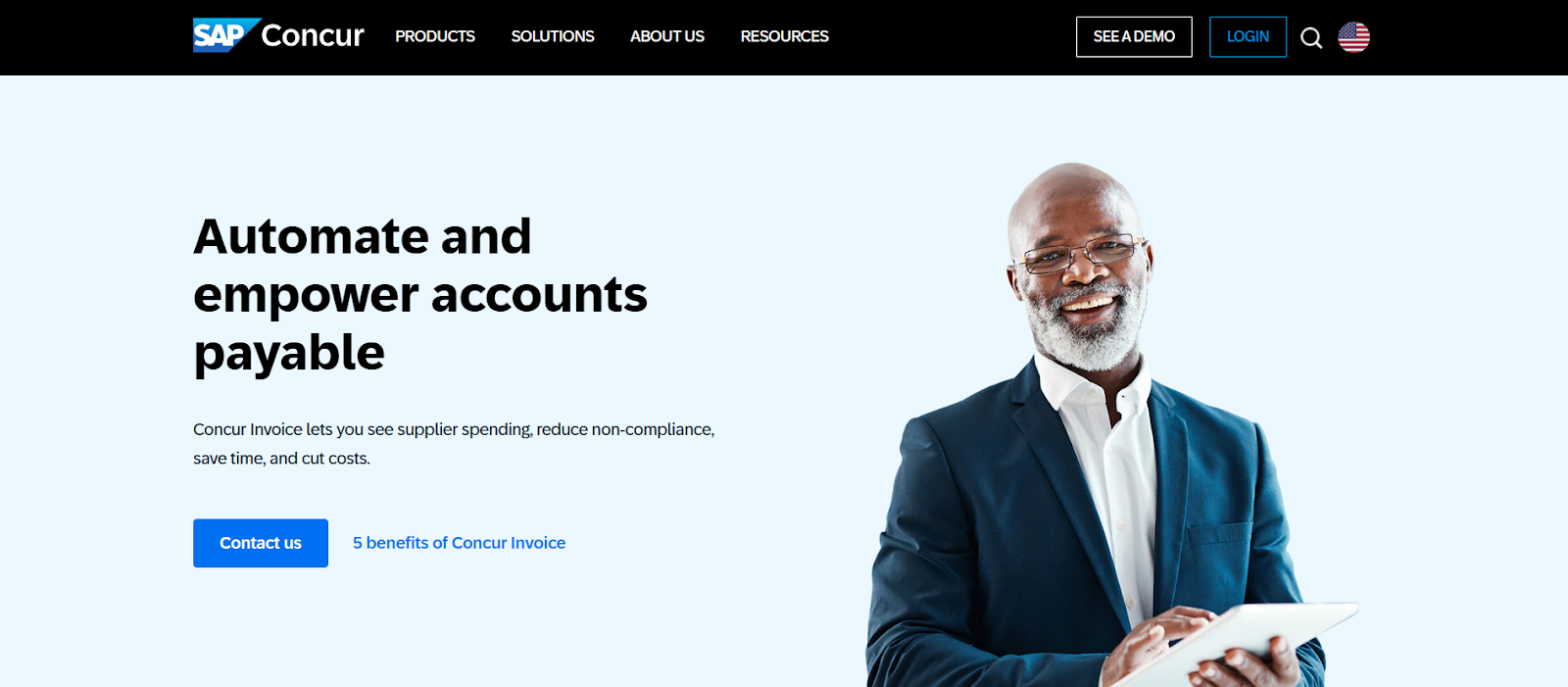
Concur Invoice is an accounts payable solution within the SAP Concur Spend Management Suite. It automates the invoice management process from capture to pay. Concur has a dynamic approval workflow that simplifies payment approvals by routing invoices to the right approver.
Pros
- Reduces manual data entry by capturing invoices with AI-powered OCR
- Gives real-time visibility into cash flow, approvals and upcoming payments
- Integrates with ERP, accounting and payment system that enables flexible data export
Cons
- Implementation can take months and is complex
- Outdated and difficult to navigate user interface.
- OCR struggles with complex invoice formats
Price: Not available
3. Bill AP/AR
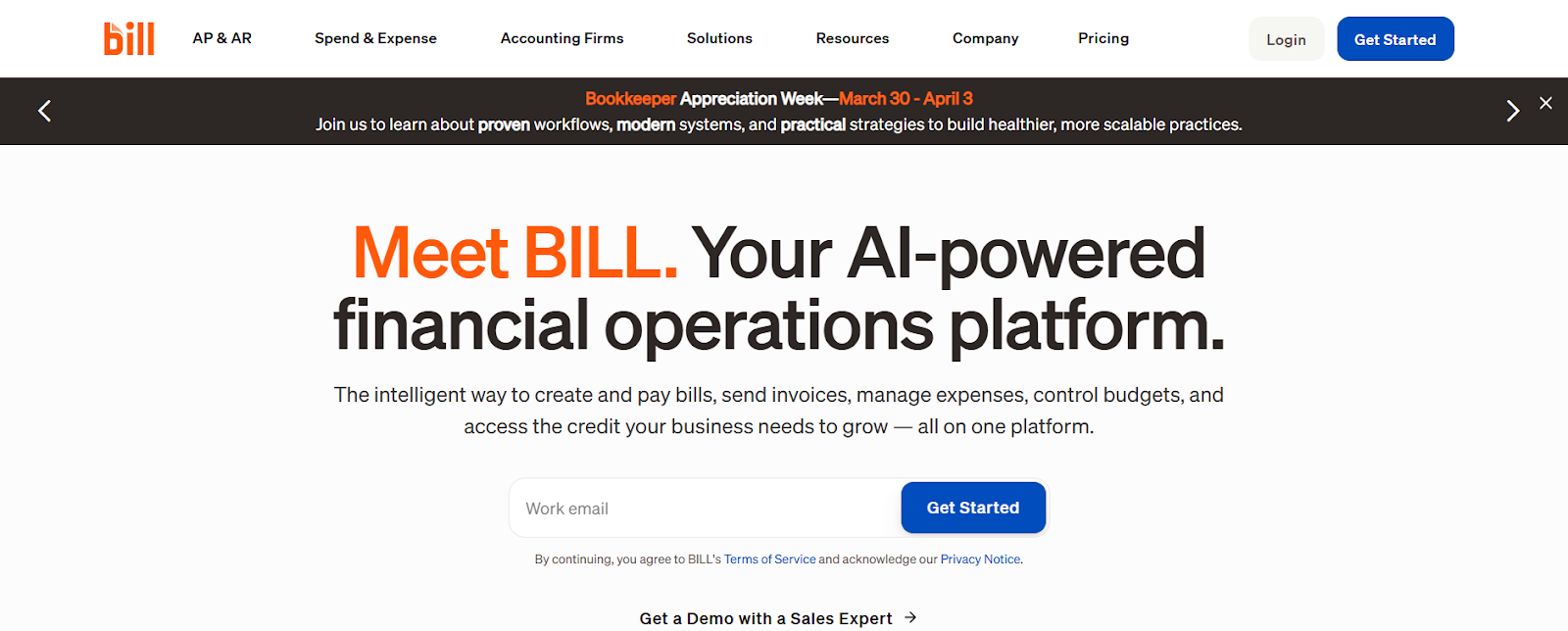
BILL is an AI-powered financial platform for automating accounts payable processes. It captures key invoice details with 99% accuracy and reduces manual work by automatically matching invoice data with POs and receipts. Businesses can create tailored approval workflows with BILL handling routing, which saves time for other business operations.
Pros
- Can extract invoices from various sources and match them with internal records
- Integrates with major accounting systems like Xero, NetSuite
- Supports multiple payment methods like ACH transfers, virtual cards, international wire transfer etc
Cons
- Limited support for complex 3-way matching and contract-based reconciliation
- Slow payment processing
- Lags in reading invoices and inputting incorrect information
Price: $49/per month, $65/per month, $89/per month, custom pricing
4. Sage Intacct
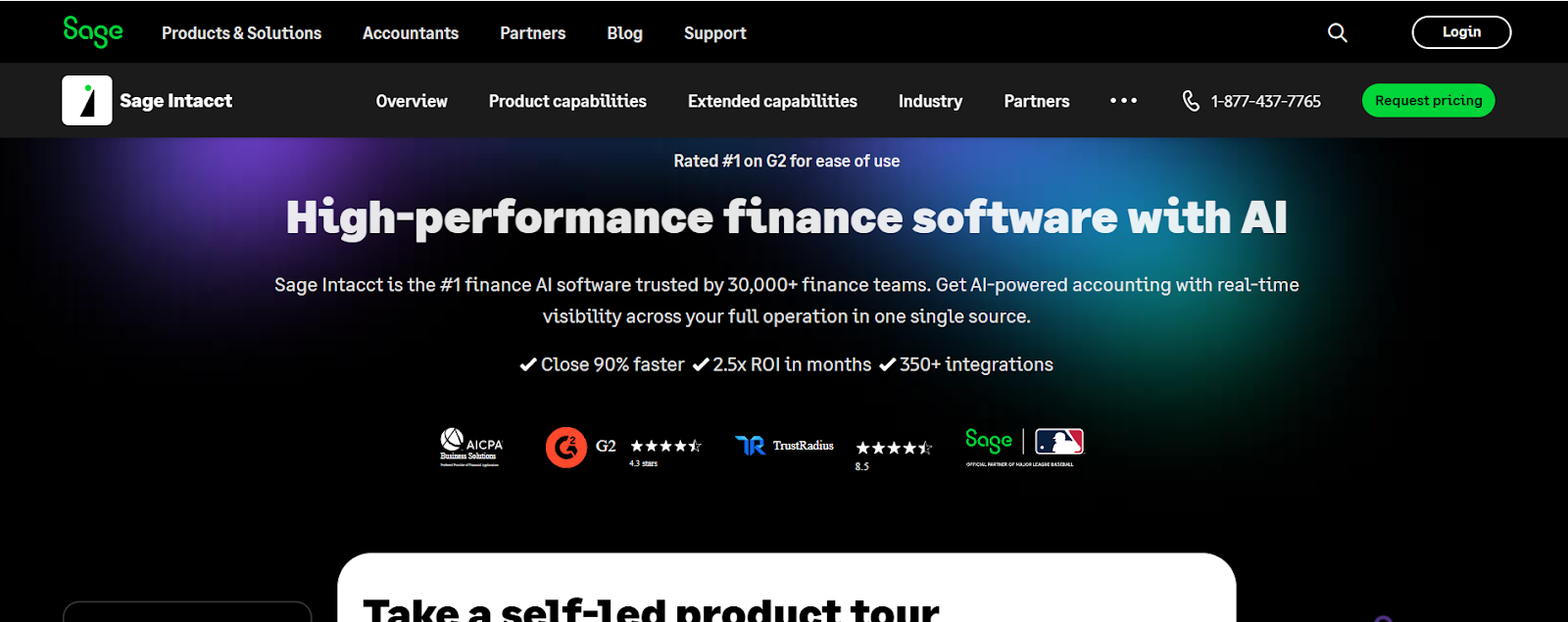
Sage Intacct is a cloud-native platform that consolidates multiple entities across geographies within minutes. Its financial intelligence agent uses historical patterns to flag unusual journal entries and curbs fraud. Sage Intacct automated AP cycle that accelerates month-end closing.
Pros
- Real-time financial visibility through dashboards, giving insights into cash balance, outstanding invoices and payment status.
- Can reconcile invoices and payments across multiple business units.
- Designed to handle increasing transactions and complex financial processes.
Cons
- User interface is outdated and unintuitive
- Requires advanced knowledge for customization and reporting features
- High implementation costs
Price: Not available
5. Stampli
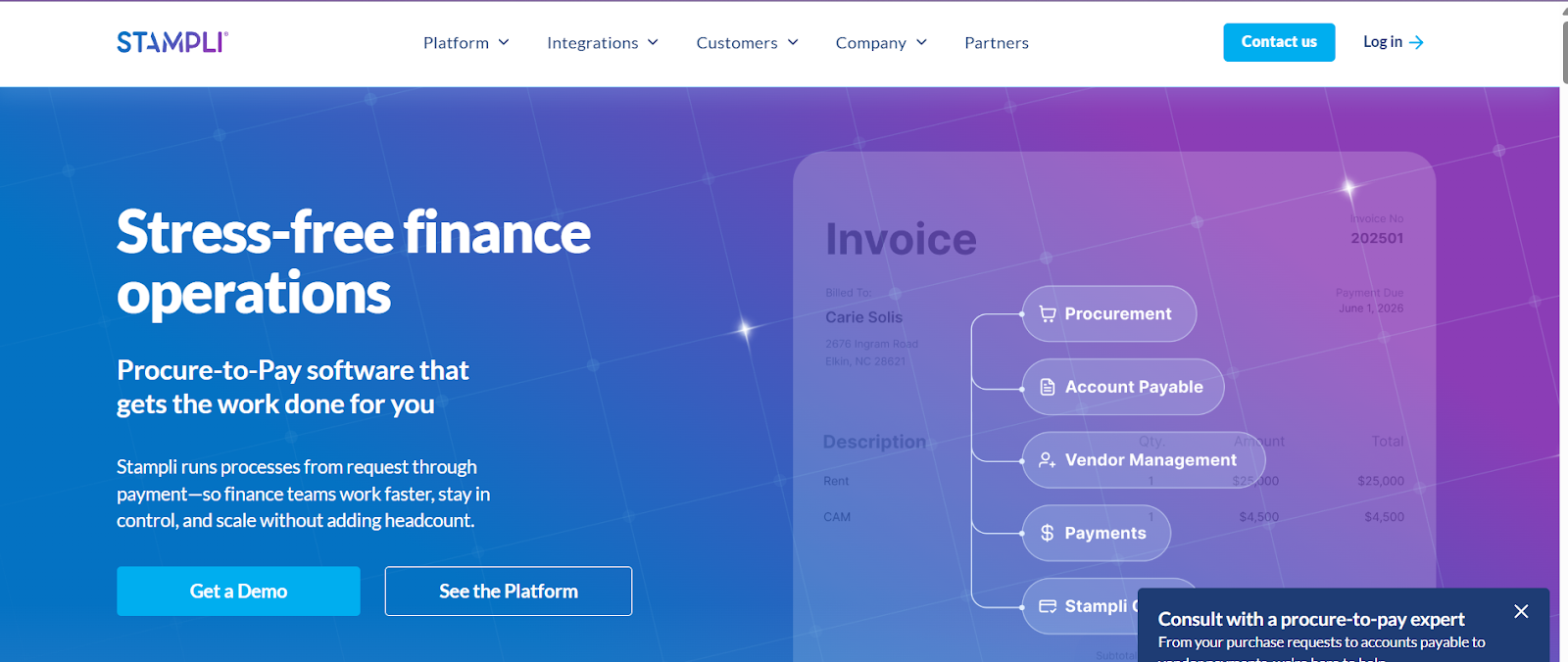
Stampli helps the accounts team work faster by utilizing intelligent coding and matching to process invoices. It allows you to see every transaction in real time, bringing more visibility and control. Stampli lets you stay inspection-ready with well-documented, immutable audit trails.
Pros
- Uses AI and OCR to capture invoices
- It can integrate with over 70 ERPs, including QuickBooks, NetSuite, SAP, etc.
- Provides collaborative AP inbox for direct communication between AP teams, managers and vendors.
Cons
- AI produces incorrect and inconsistent invoice data
- Limited functionality with uploading multiple receipts and assigning approvers
- Excessive and complex for small businesses
Price: Not available
6. Tipalti
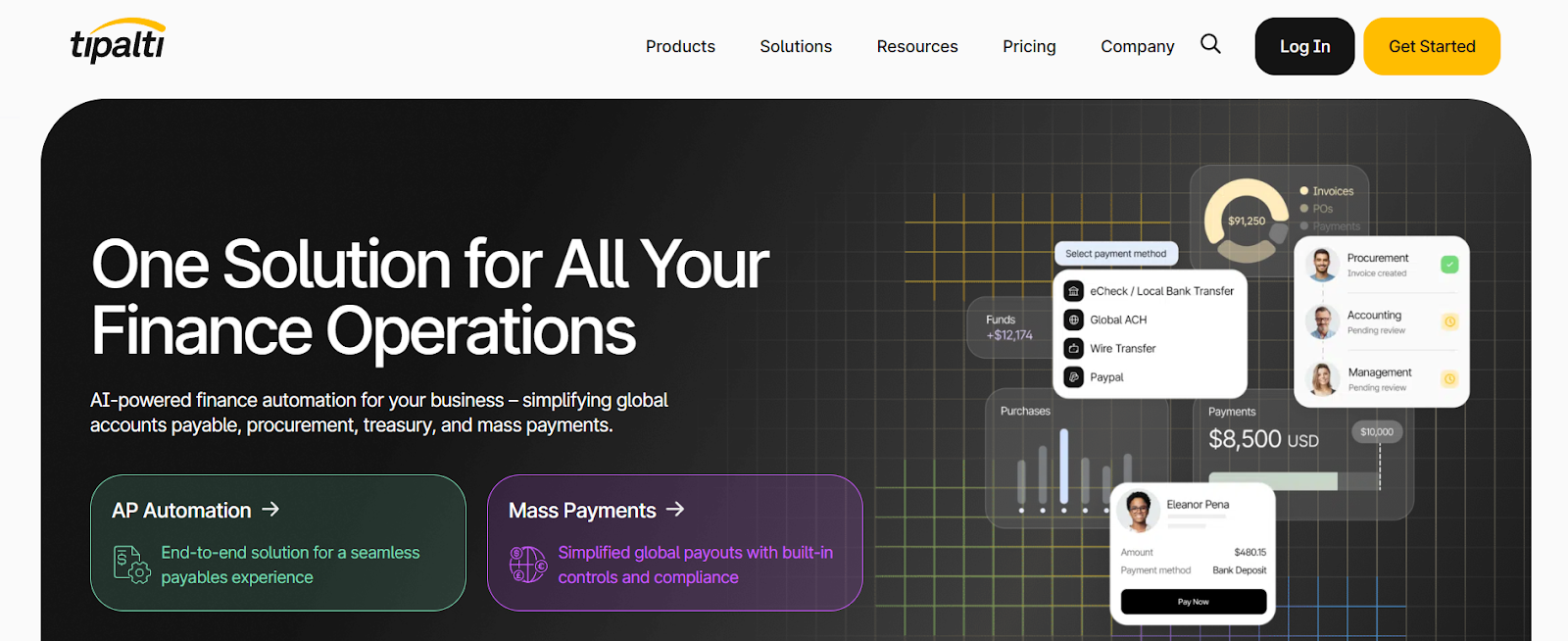
Tipalti is a finance automation tool that simplifies global accounts payable, treasury, procurement and mass payments. Its AI agent saves time by automatically performing prescribed tasks such as generating reports, identifying approvers or creating purchase requests. Tipalti's global payment infrastructure helps make payments in 120 currencies across 196 countries.
Pros
- Reduces manual work with end-to-end AP workflow automation, including invoice capture, approval and reconciliation
- Supports 2-way and 3-way matching and helps identify discrepancies
- Can make payments globally to 196+ countries using ACH, wire, PayPal, etc.
Cons
- Lacks transparency in pricing
- Difficult troubleshooting in case of payment failure
- Delayed syncing with ERPs and glitches in the system
Price: 99 Euros/per month, 219 Euros/per month, custom pricing
7. MineralTree
MineralTree is an AP automation platform built in partnership with Sage. It’s a cloud-based platform that automates the entire invoice-to-pay cycle. MineralTree can scale with your enterprise and process tens of thousands of invoices every month and easily reconcile vendor payments in your ERPs. Its dashboards give real-time insight into KPIs, which allows businesses to efficiently make strategic business decisions.
Pros
- Its OCR captures can invoice data, including line items
- Provides reports and audit trails for the month-end close and compliance
- Detects and flags duplicates early in the invoice processing
Cons
- Integration with ERPs takes time and has sync issues
- Delays in payment due to slow transit time
- Limited search and tracking functions hinder reconciliation
Price: Not available
8. Corpay Complete
Corpay is an end-to-end spend management platform that automates accounts payable, invoice reconciliation, and vendor payments. Its automated workflows handle routing and approval, thus saving time for other operations. Corpay’s virtual card payments not only reduces fraud risks but also help you earn rebates.
Pros
- AI and ML-powered OCR reduce data entry by automatically capturing invoice data
- Supports 2-way and 3-way invoice matching that helps detect discrepancies
- Allows approvals to be customized according to amount, department or vendor
Cons
- Difficulty standardizing data from ERPs, leading to reconciliation errors
- Delays payments, which impacts business operations
- User interface is difficult to navigate
Price: Not available
9. FloQast
FloQast is a cloud-based technology that automates accounting workflows. It allows businesses to build their own no-code AI agent tailored to their needs, that handles invoice capture, standardization, reconciliation and the month-end close process. FloQast makes compliance easy with ISO 42001 certification and traceable checkpoints for audits.
Pros
- Uses rules or AI-driven tools for invoice reconciliation
- Maintains audit-ready workflows by keeping a history of activity logs
- Seamlessly integrates with major ERP systems
Cons
- Unsuitable for small teams due to high cost
- Requires manual adjustment for complex invoice reconciliations
- Slows down when handling high volume of data
Price: Not available
10. Yooz
Yooz is an intelligent automation tool for financial operations. It has a flexible workflow engine and uses real-time applied AI that easily captures invoices and reduces matching errors. Yooz strengthens financial defenses with an AI-driven suite of fraud prevention tools that detect anomalies and increases payment integrity.
Pros
- Intelligently captures data from invoices using AI and OCR
- Simplifies financial reviews by storing all invoices in one searchable database
- Can integrate with more than 250 ERP and accounting systems
Cons
- OCR sometimes captures inaccurate data from invoices.
- Delayed implementation and unintuitive UI
- Lacks advanced customization options for reports and analytics.
Price: Not available
How Osfin Enhances Invoice Reconciliation
Osfin is a game-changer for all your reconciliation needs. It has automated financial operations for many fintech, banks, and e-commerce companies. To streamline your reconciliation process, Osfin come equipped with the following features-
- Multi-source ingestion: Osfin can capture data from multiple sources in different formats like PDF, CSV, and Excel. It removes poor-quality data in the beginning to avoid downstream issues.
- Speedy reconciliation: Osfin is capable of doing 30 million reconciliations in 15 minutes. It can perform multi-way reconciliations, including 2-way, 3-way, 4-way, and 5-way.
- Exception handling engine: It automatically flags duplicates and outliers and routes them to the right person for handling. This feature protects businesses from fraud.
- Compliance: Osfin complies with SOC 2, PCI DSS, ISO 27001 and GDPR requirements and secures data with 256-bit encryption. It proves transaction traceability and maintains audit-ready workflows.
How to Choose the Right Invoice Reconciliation Software
The right invoice reconciliation tool would fit all your accounts' needs. It would include
- Easy invoice and data importing
- One-to-many and many-to-one reconciliations
- Fraud detection
- Audit-ready workflows
Conclusion
A business’s dealings are its lifeblood and must be properly maintained. It involves many invoices that must match their payments. Reconciling data is a long and difficult task, but with the right tool, it can be streamlined. Invoice reconciliation software eases the burden on finance teams and frees up time for better resource planning. Businesses should consider all their options and choose the one that best fits their budget and operations.
Osfin has helped automate many finance operations, and it might just be what you are looking for. Book your free trial now!
FAQs
1. What is invoice reconciliation?
Invoice reconciliations are the task of matching vendor invoice data with purchase orders and bank statements to balance accounts and resolve discrepancies.
2. Can invoice reconciliation be automated?
Yes. Invoice reconciliation is a tedious task that can lead to many errors when done manually. That is why we now have tools designed to automate this task. These invoice reconciliation tools can perform multi-way reconciliations.
3. What are the benefits of using invoice reconciliation software?
It reduces manual workload and easily detects fraud. It maintains audit-ready workflows and helps with better cash flow management.
4. How do I choose the right invoice reconciliation tool?
The right invoice reconciliation tool would easily import data from multiple sources, perform speedy multi-way reconciliations, and generate reports to support audits.