Osfin vs ReconArt: Which Financial Reconciliation Platform Is Best for You?
Financial reporting and reconciliation are one of the most critical tasks for banks and financial institutions. They are also among the most complex. You need to track large volumes of transactions, have a sharp eye to identify mismatches, and maintain accuracy at all times. As such, it's safe to say you need to put in a lot of time and effort.
Thankfully, there are now automated platforms that make this easier. They help you cut down on manual work, reduce the chances of errors, and focus on more important tasks.
Two such platforms are Osfin and ReconArt. Both of them are trusted by businesses looking to simplify their financial operations. But not every tool will fit every business need.
In this article, we'll do a detailed comparison of Osfin vs ReconArt so you can choose the one that's right for you.
What is Osfin?
Osfin is a financial operations platform that helps businesses manage and automate key finance activities. It lets you handle tasks like reconciliation, commission calculations, and payout delivery all in one place.
The platform has clear, easy-to-use dashboards that make it easier for your team to track cash flow and prepare accurate reports. It saves time, cuts down on manual work, and lets you focus on what matters most.
Businesses across industries trust Osfin for its accuracy and reliability. It can handle complex financial processes while ensuring you're audit-ready. Osfin also follows strict global standards to protect your financial data, including:
- SOC 2 compliance for secure and reliable operations
- GDPR compliance to meet European data privacy rules
- ISO 27001 certification for strong information security
- 256-bit SSL encryption to protect sensitive data
- PCI DSS and PCI SSF compliance for safe handling of payment information
{{banner1}}
What is ReconArt?
ReconArt is a financial reconciliation software that helps businesses automate complex matching tasks. It compares financial data from different systems to make sure every transaction is correct. This cuts down manual work and helps you spot errors or mismatches faster.
The platform handles high transaction volumes across different financial activities, including:
- Bank statements, credit card payments, and online transactions
- Payables and receivables
- General ledger and sub-ledger accounts
- Intercompany and securities reconciliations
ReconArt is a web-based solution used across industries such as banking, payments, travel, retail, and insurance. It also supports financial close management with tools for balance sheet reconciliation, journal approvals, and variance checks.
The platform also follows strict data security standards. It is ISO 27001 certified and hosted in Tier 4 data centers compliant with SSAE16, PCI DSS, and HIPAA. It also complies with GDPR requirements to keep client data safe and confidential.
Osfin vs ReconArt
Here's a quick side-by-side comparison to understand the key differences between Osfin vs ReconArt:
Osfin vs ReconArt Comparison
Both Osfin and ReconArt serve the same purpose - automating financial operations. But they differ quite a lot in various aspects. Knowing what is the difference between Osfin vs ReconArt can help you decide which platform fits your business's needs better. Let's jump right in.
1. Osfin
Osfin is a financial automation platform that helps you manage your financial operations with better accuracy and control. It automates manual, error-prone tasks so you can focus on more important activities. The platform offers tailored integrations for every business, reducing revenue leakages and boosting productivity.
Pros:
- Automated Fund Tracking: Osfin handles repetitive financial work, so you don't have to track funds manually. It saves time, reduces mistakes, and helps your team focus on more important tasks.
- Duplicate Detection: The platform quickly identifies unusual or duplicate transactions. This prevents costly errors and revenue loss before they escalate.
- Exception Handling: Osfin automatically flags and organises exceptions. Your team can review and resolve them faster, keeping the process organized.
- Multi-source Reconciliation: It brings together data from multiple sources, such as donations, grants, and settlements. This ensures your financial data is always accurate.
- Audit Trails and Compliance: Osfin keeps a detailed record of every transaction. It helps you meet compliance standards easily and stay prepared for audits anytime.
Features:
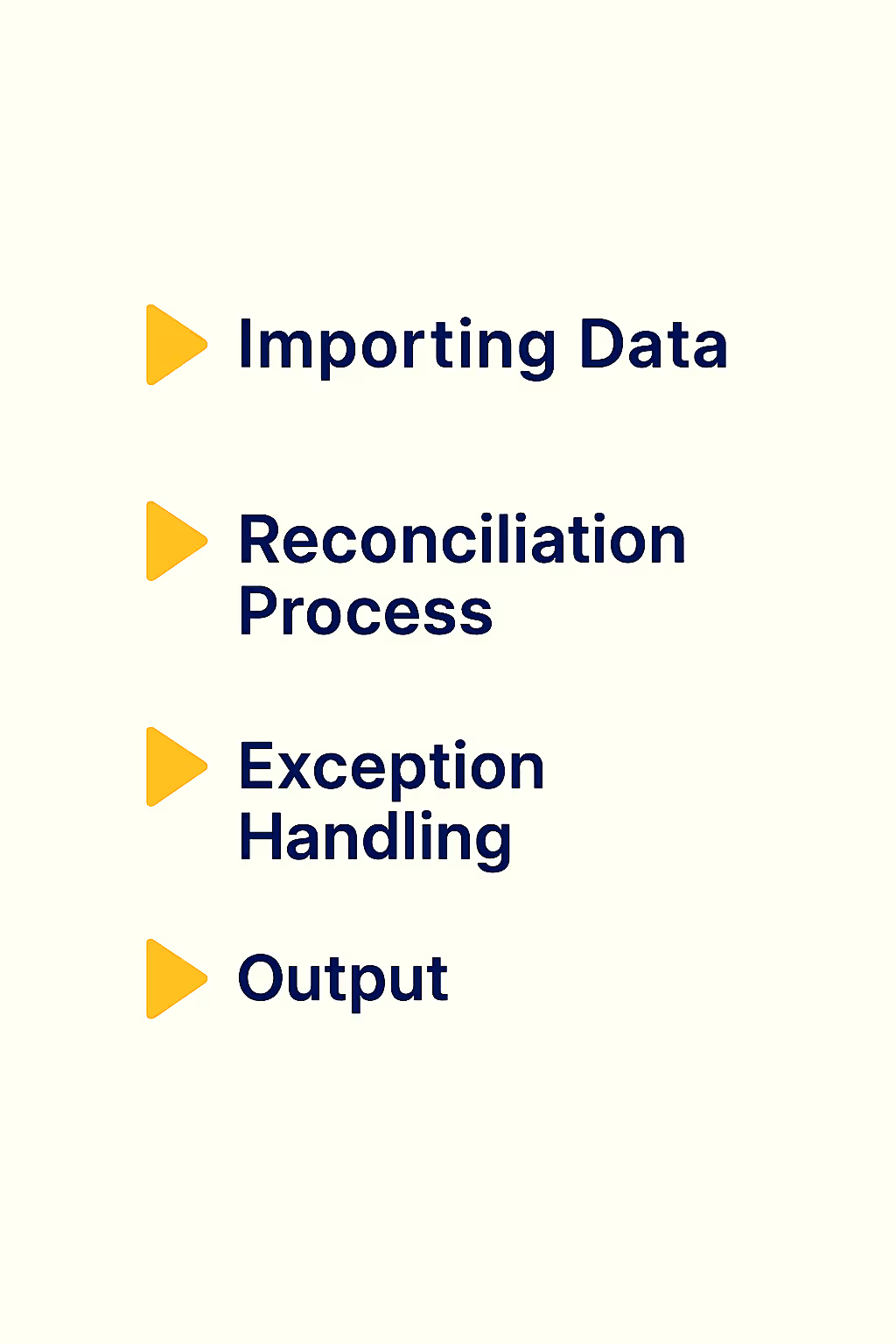
- Importing Data
Osfin supports over 170 integrations and works with any file format. It brings in data from multiple sources and checks for quality issues before reconciliation. It also detects duplicates and outliers at the point of ingestion to prevent problems later. Osfin also comes with custom deviation tolerances that help filter poor-quality data automatically.
- Reconciliation Process
The platform uses logic-based matching and can handle one-to-many or many-to-one transactions. It can reconcile up to 30 million records in just 15 minutes. Plus, payment gateway reports are automatically reconciled along with commission, tax, and fee breakdowns.
- Exception Handling
Osfin flags unmatched transactions automatically with a clear reason. The system routes these to the right team member using its ticketing engine. Live dashboards show match status, exceptions, and exposure in real time.
- Output
Osfin delivers compliance-ready reports and keeps audit-ready workflows with full traceability of all transactions. Data is protected with 256-bit encryption, role-based access, and two-factor authentication. The platform also meets SOC 2, PCI DSS, ISO 27001, and GDPR standards.
Integrations:
Osfin offers API integrations with over 170 systems. It helps combine data from multiple sources into one place. This makes it easier for finance teams to work with all their data without switching between systems.
Reviews Summary:
Osfin's customers appreciate how the platform simplifies financial operations. Here's what they like most:
- Timely settlements and payouts let teams focus on growth instead of manual work.
- Accurate reconciliations improve productivity and reduce the need for constant internal support.
- Real-time cash flow tracking gives a clear view of every detail from SKUs to taxes and state-wise charges.
- Easy handling of large transaction volumes ensures full visibility across databases, payment gateways, and banks.
{{banner1.1}}
User Interface:
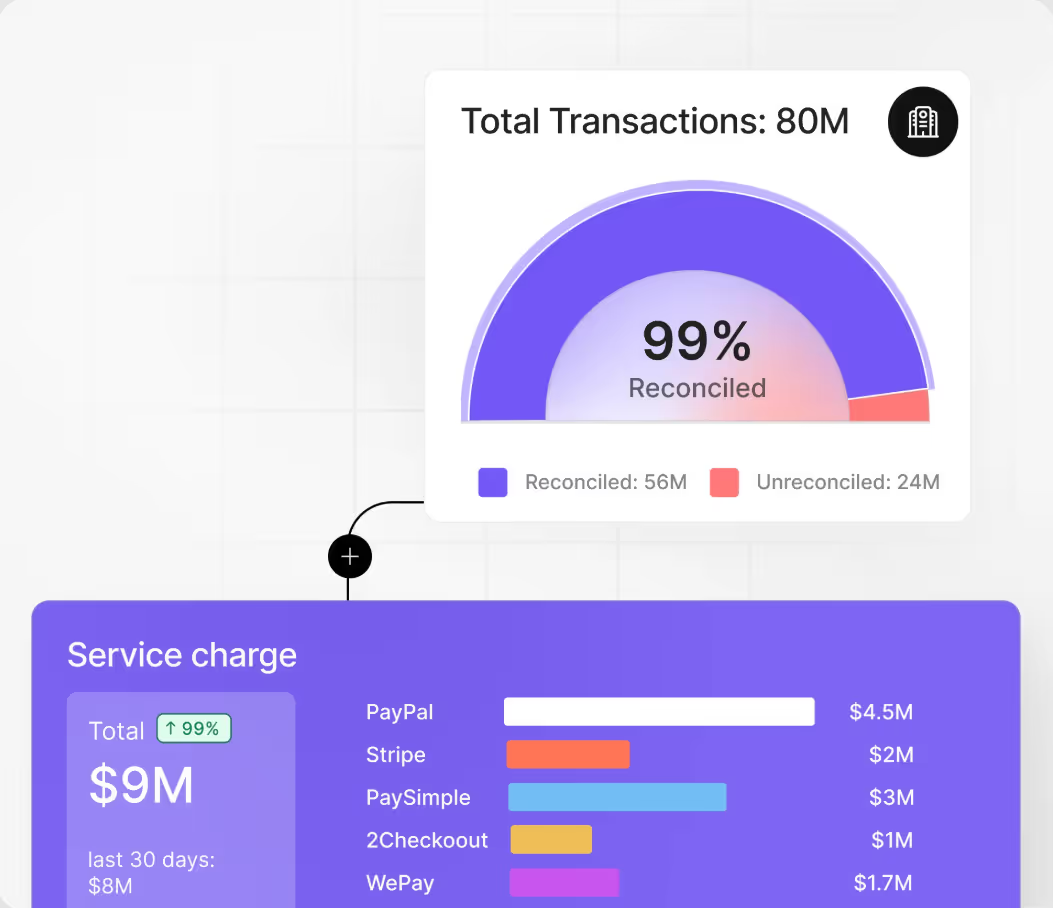
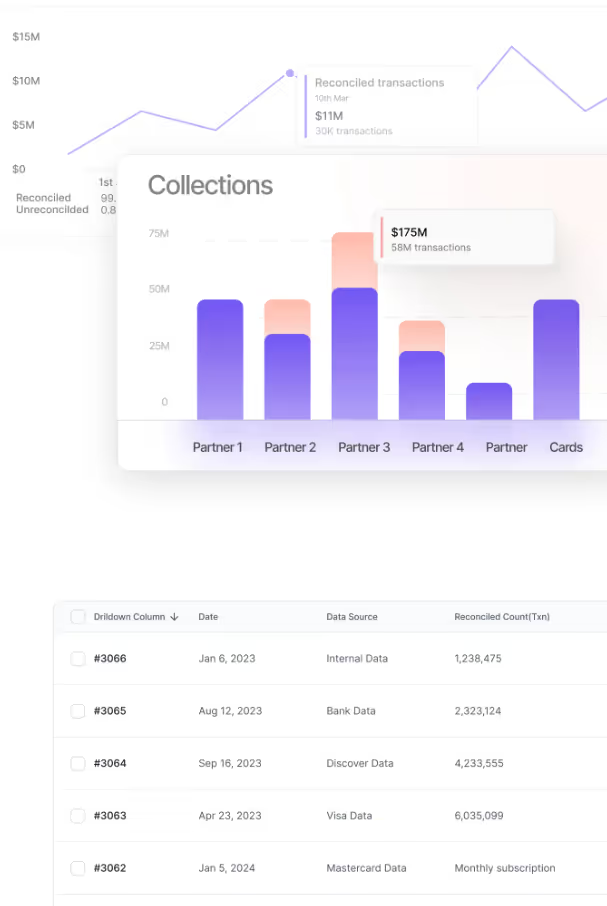
Osfin's user interface is simple and efficient. Yet, it can easily handle complex financial operations. Here are some of its standout benefits:
- A no-code/low-code design makes it easy to adapt to business changes without technical support.
- A collaborative interface that comes with integrated comments, audit trails, and notifications, helping teams work together smoothly.
- A clean, modern layout that is easy to learn and use from day one.
- Supports complex operations across wallets, FBO accounts, real-time payments, and APIs.
- A cloud-native and file-agnostic design for flexibility and long-term usability.
Dashboard Images:
2. ReconArt
ReconArt provides an all-in-one solution for managing financial reconciliations and financial close processes. It helps you manage balance sheets, approve journals, track period-end tasks, and review variances with ease. The platform automates most of the heavy work, from importing data and matching transactions to managing exceptions and generating reports.
Pros:
- Automated reconciliations save time and reduce manual work.
- Configurable approval workflows provide better control and auditability.
- Integrates smoothly with ERPs, internal systems, and APIs.
- Fully web-based and can be implemented within weeks, making it user-friendly and flexible.
- Handles high-volume transactional matching and financial close in a single solution.
- Scalable for any industry and type of reconciliation process.
Cons:
- Pricing is not always clear, making it hard to compare costs upfront.
- Users need training to use the platform effectively.
- Implementation fees can be high, especially for complex setups.
- The platform may be complicated for small businesses.
- Annual price increases are possible, which can affect budgeting.
- Limited free trial or demo options make it difficult to test the platform before purchase.
Features:
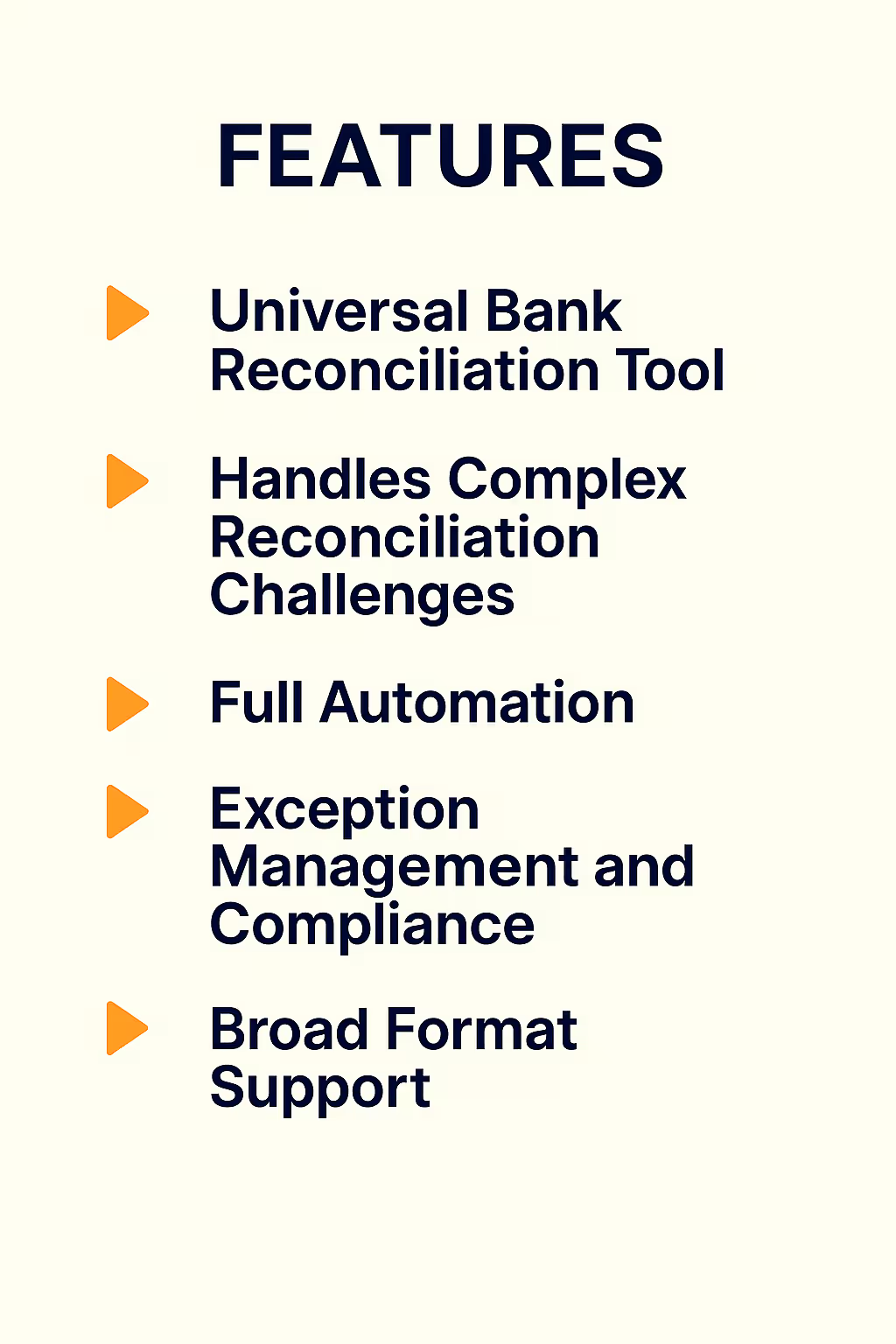
- Universal Bank Reconciliation Tool: Helps businesses of any size accurately match bank statements with their internal accounts.
- Handles Complex Reconciliation Challenges: Can manage large volumes of transactions, different bank formats, multiple currencies, and complicated matches like one-to-many or many-to-many.
- Full Automation: Automatically imports and organizes data, matches transactions using rules, and classifies exceptions for reporting.
- Exception Management and Compliance: Identifies mismatches such as bank fees, delays, or deposits in transit, and helps resolve them quickly while maintaining a clear audit trail.
- Broad Format Support: Works with common formats like CSV, XLSX, ACH, SWIFT, and also supports custom or unusual file types.
Integration:
System and Source Agnostic: Works with any bank or merchant statements, general ledger, ERP, accounting system, core banking platform, and other subledgers. It can handle both standard and custom data sources.
- Bank and External Transaction Files: Supports industry-standard formats like BAI and SWIFT. Works with major providers such as Wells Fargo, Bank of America, Chase Paymentech, PayPal, and American Express. Custom sources are also supported.
- Business-Owned Data Tools: Let users create templates to import or export data automatically. Data normalization and enrichment can be set up once and run automatically.
- Closing the Loop: Data imported into ReconArt can also be exported back to other systems, such as generating journal entries on a regular basis.
- Deeper Integrations: Supports API or web services connections to ERPs like NetSuite. Enterprise features like single sign-on are also available.
Reviews Summary:
ReconArt has mixed customer reviews. While some appreciate its ability to handle complex and repetitive reconciliations, others say the tool didn't really work for them. Here's a quick summary of some real ReconArt reviews:
- Helps clear simple one-to-one matches quickly and lets users set up rules for ongoing transactions.
- Automates complex reconciliations and allows importing data from multiple sources.
- Saves a lot of time on manual matching, especially for large volumes of transactions like bank and corporate card reconciliations.
- Improves accuracy by resolving cash clearing issues within the period instead of waiting for the month-end.
- Some users find it less intuitive for first-time users. In fact, some complex match rules may require IT support.
- Implementation can be slow for certain advanced reconciliation setups.
- Works well for standard reconciliations but may be difficult to fully adopt for highly customized processes.
User Interface:
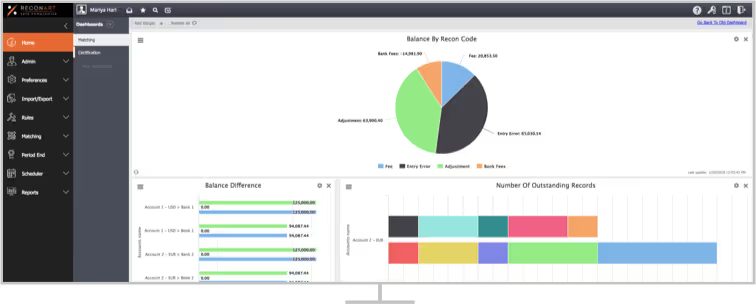
ReconArt offers a simple and user-friendly interface for financial teams.
- Web-Based Portal: Lets users upload files easily and verify them instantly.
- Cloud Storage Support: Works with Dropbox, Microsoft OneDrive, Google Drive, and Amazon S3.
- Easy to Use: Simplifies file handling and reconciliation for teams without complex setup.
Dashboard Images:
Why Consider Osfin Comparing ReconArt?
Selecting the right option between Osfin and ReconArt can make a big difference in your financial reporting and operations. Here are some reasons why Osfin is a better choice:
- End-to-End Automation: Osfin collects and processes data from multiple systems like core banking, payment gateways, and banks without manual effort.
- File-Format Agnostic: You can upload data in any format and connect over 170 different sources.
- Fast Processing: The platform can reconcile more than 30 million transactions in just 15 minutes.
- Accurate Matching: Its AI-based logic matches transactions one-to-one, one-to-many, or across multiple sources with high accuracy.
- Real-Time Exception Handling: Any mismatch is flagged right away, explained, and sent to the right team for quick action.
- Complete Visibility: Clear dashboards show your cash flow and unreconciled transactions in one place.
- Strong Compliance: Osfin keeps detailed audit trails and follows global standards like SOC 2, PCI DSS, ISO 27001, and GDPR.
Ready to level up your reconciliation process? Book a demo today to see Osfin in action.
FAQs
1. Which is better: Osfin or ReconArt?
Osfin is a better choice if you need to handle high-volume reconciliation with seamless integration across different financial systems. ReconArt, on the other hand, may be ideal for balance sheet and period-end reconciliations.
2. What is the difference between Osfin and ReconArt?
While Osfin and ReconArt serve the same purpose, they are different in many ways. For example, Osfin can process 30 million records in just 15 minutes, while ReconArt is designed for steady, period-end reconciliations. Plus, Osfin provides a modern, intuitive interface with real-time dashboards. ReconArt, on the other hand, offers a comprehensive suite for financial close management.
3. How does Osfin streamline the reconciliation process?
Osfin automates reconciliation through logic-based matching, high-speed processing, and automated payment gateway reconciliation.
4. How is Osfin better than ReconArt?
Osfin is better than ReconArt in terms of speed, integration, and automation. It can process millions of records swiftly, reducing reconciliation time. It also connects with over 170 systems and uses AI to automate complex matching and exception handling.