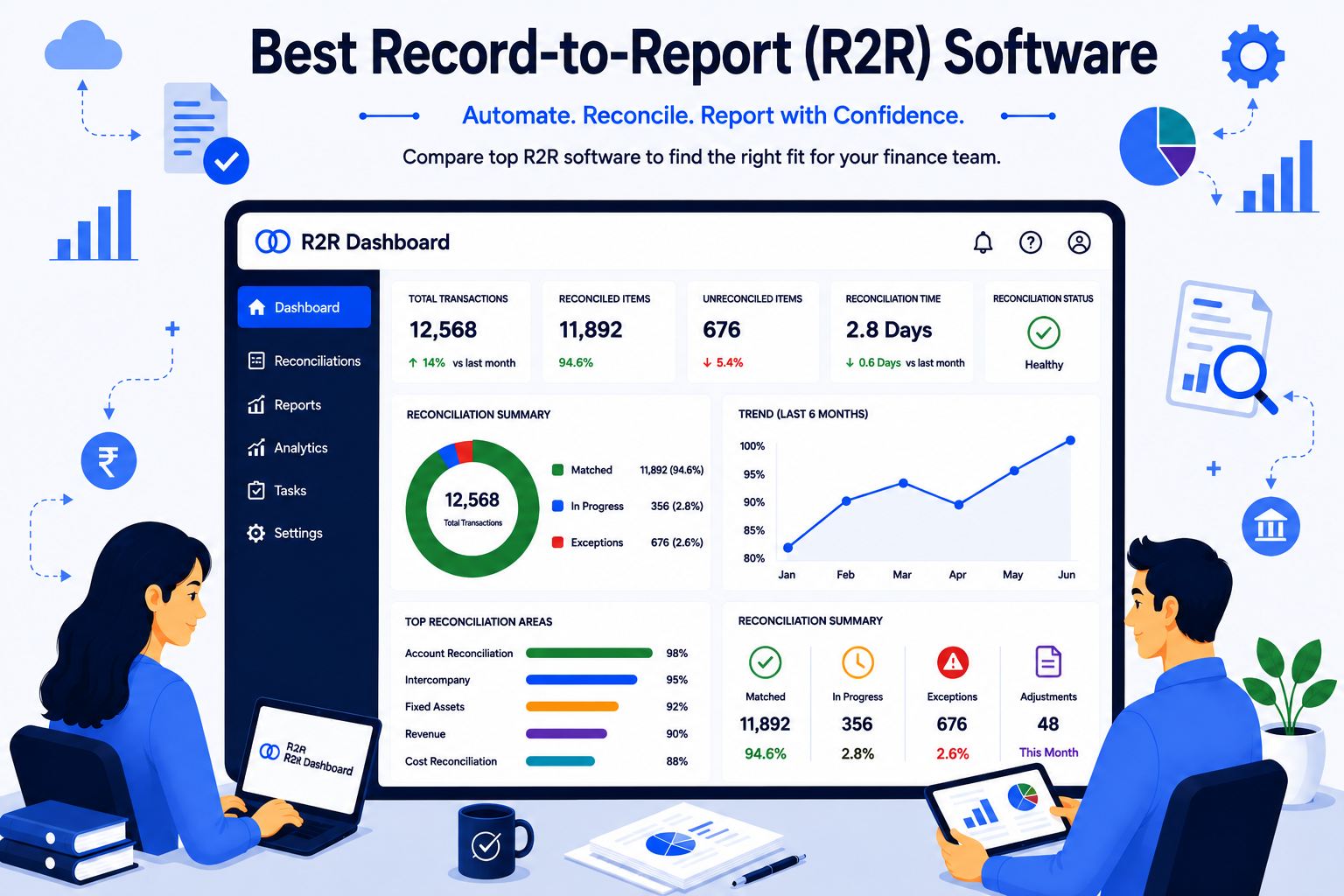
Best Accounting Reconciliation Platforms 2026: Comparison, Features & Reviews
TL;DR
Manually matching transactions and looking for discrepancies in spreadsheets can be slow and error-prone. Accounting reconciliation platforms help by automatically matching transactions, verifying balances, and keeping your financial data accurate.
This article will walk you through the top 10 reconciliation tools for 2026, including Osfin, BlackLine, HighRadius, FloQast, Xero, Vena, and more. These platforms use automation to cut down errors and speed up the month-end close.
To select the right option, consider your transaction volume, reconciliation complexity, and compliance requirements. The right fit can make closing faster, cleaner, and a lot less stressful.
What Is Accounting Reconciliation Platform?
Accounting reconciliation platform is a tool that automates the process of:
- Matching transactions
- Validating account balances
- Maintaining consistent financial data
Instead of doing this manually, you can use the platform to handle the repetitive work. In fact, it does this faster and more accurately.
Let's go back a few years. Finance teams spent days comparing bank statements, manually entering data into spreadsheets, and hoping they hadn't missed anything. That approach left a lot of room for errors. Say, a skipped transaction, a delayed month-end close, etc.
Modern accounting reconciliation tools fix these problems. They use transaction matching capabilities to compare transactions across multiple data sources and flag records that may need a human review.
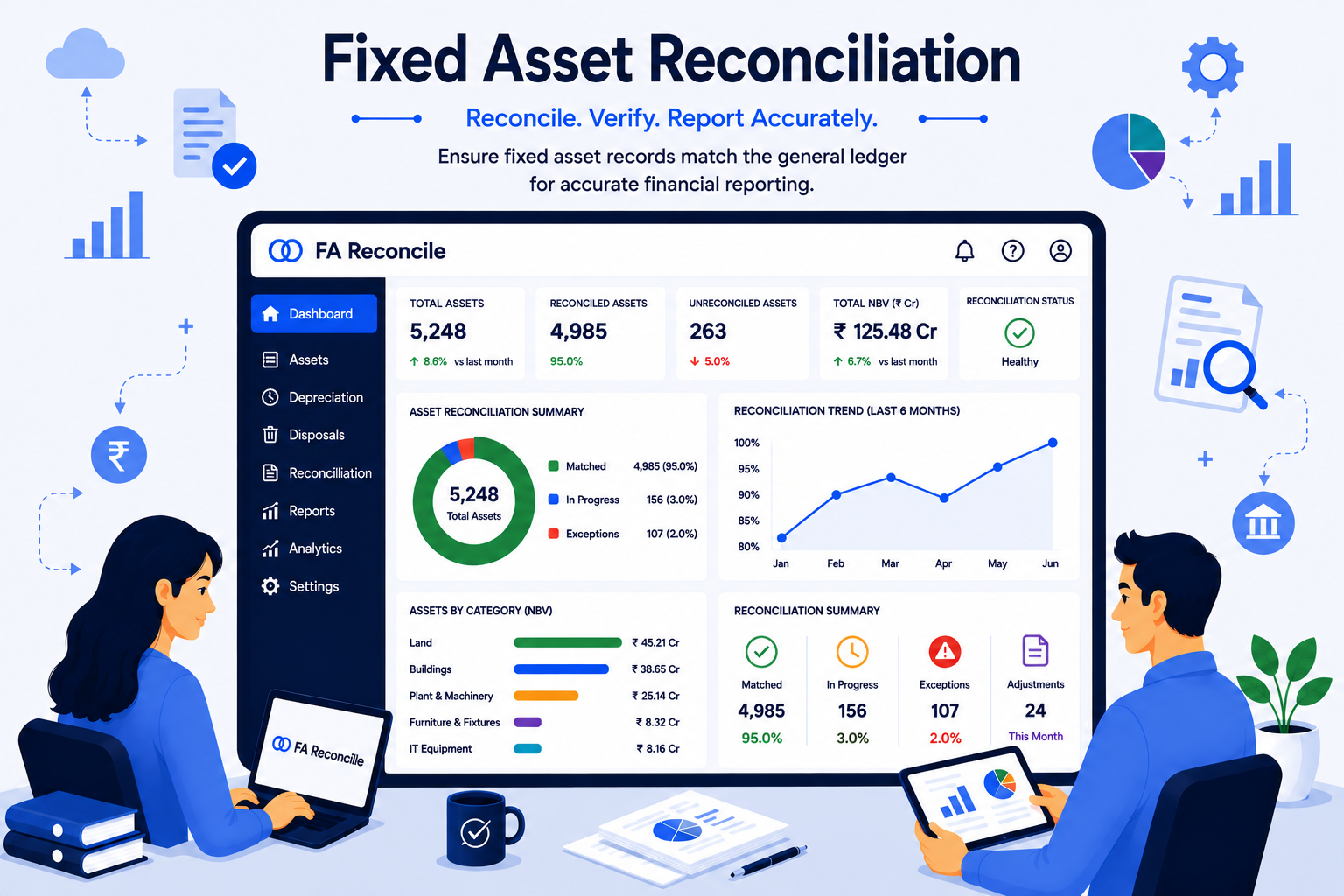
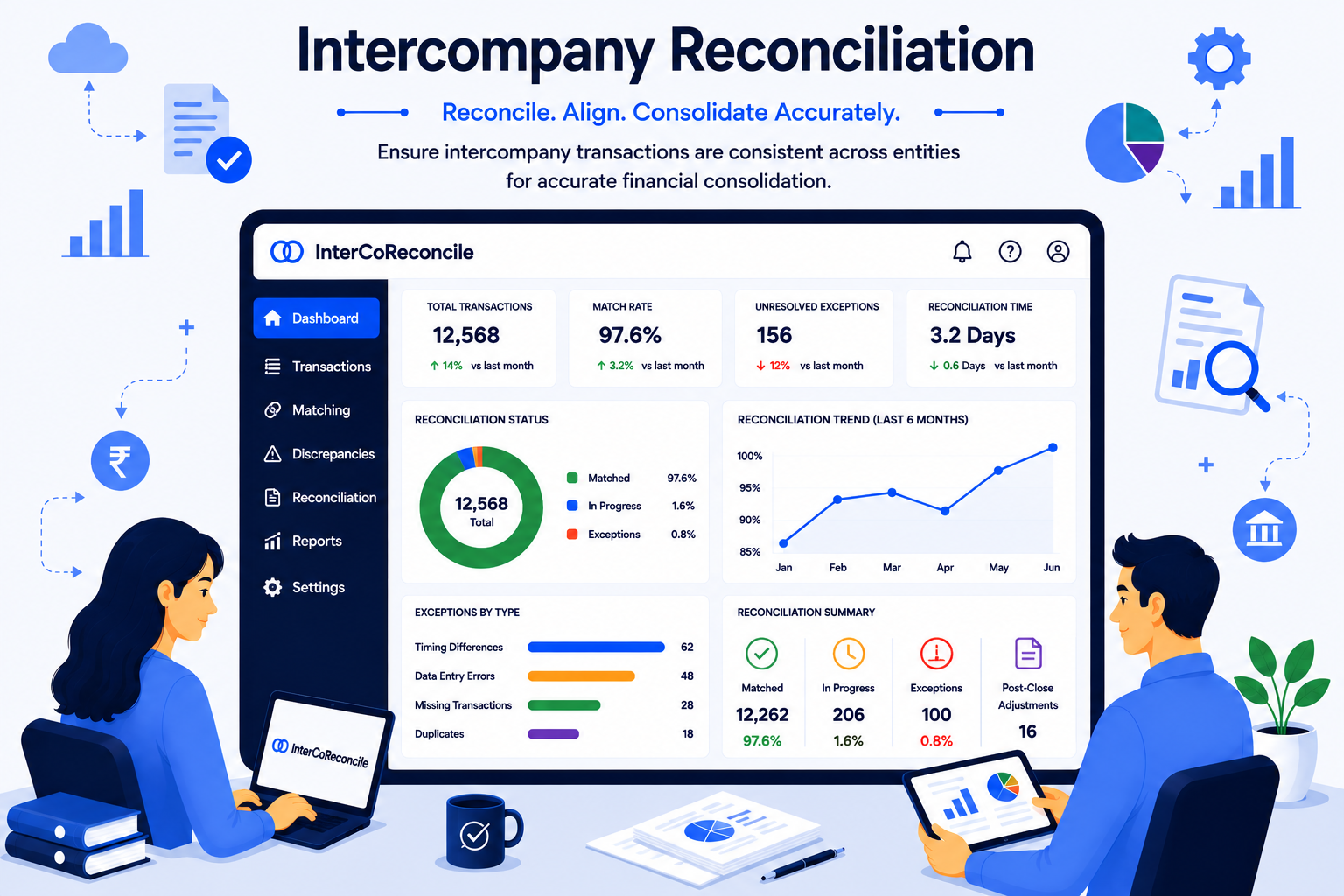
In fact, these tools are not just limited to bank reconciliation. You can use them to handle credit cards, merchant accounts, payroll, fixed assets, intercompany transactions, and more.
How We Evaluated the Top Accounting Reconciliation Platform
We understand that selecting the right tool isn't just about the most cost-effective or the most feature-rich options. This is why we looked at what really matters for finance teams day-to-day.
We've considered different factors, including:
- The depth of features.
- How well the tools integrate into your daily workflow.
- What real users say about their experience.
Key Features to Look for in Accounting Reconciliation Platform
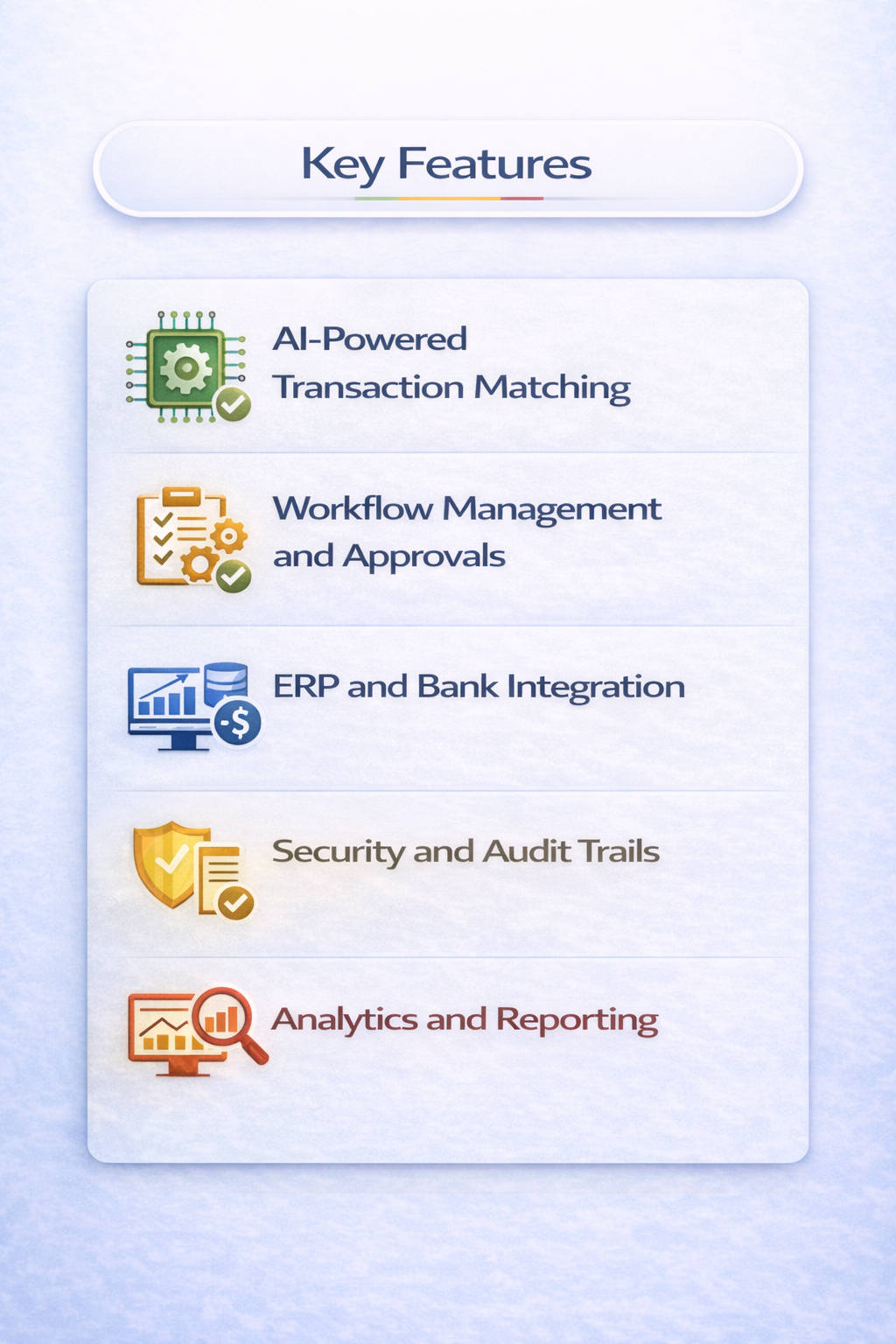
Just one Google search can reveal the dozens of accounting reconciliation tools available today. However, not all of these tools are built the same. Neither will every tool suit every business. Here are some features you should consider:
1. AI-Powered Transaction Matching
The best accounting reconciliation platform uses machine learning to match transactions. They don't just rely on simple rule-based logic. Look for solutions with auto-match rates of more than 90%, even when data is incomplete, or transactions are complex. Over time, the system will learn from how your team resolves exceptions and get better at flagging what actually needs attention.
2. Workflow Management and Approvals
A good platform automates the entire process, right from data ingestion to final checks and compliance. It should:
- Support role-based access so the right people are handling the right accounts.
- Send automatic notifications when action is needed.
- Distribute work evenly across the team.
3. ERP and Bank Integration
Select a platform that can connect to the systems you already use. These include ERPs like SAP, Oracle, or NetSuite, as well as your banking platforms. Direct API connections keep data in sync in real time. For systems without API support, secure file imports fill the gap.
4. Security and Audit Trails
Financial data is sensitive. Your platform should protect it. Look for AES 256-bit encryption, role-based permissions, and segregation of duties. The system should also log every action with a timestamp and user ID. This creates a clear record that makes audits far less painful.
5. Analytics and Reporting
The system should show where your reconciliations stand at a glance. Look for platforms that show match rates, exception volumes, resolution times, and team performance. Custom reporting is another great feature to have. It lets you pull together everything you need for management, auditors, or other stakeholders without starting from scratch every time.
Benefits of Using Accounting Reconciliation Platform
From cutting down manual work to ensuring compliance with different regulations, accounting reconciliation platform offers a ton of benefits for businesses.
1. It Cuts Down Manual Work Significantly
The platform automatically handles transaction matching and comparison. This means your team isn't buried in spreadsheets for hours. With an automated tool, you can catch discrepancies faster and process multiple accounts in a fraction of the time.
2. Your Financial Data Becomes More Accessible
Financial data often gets stuck inside finance processes where no one else can see it. Reconciliation platform brings that data out into the open. It makes it available to the people across your organization who need it.
3. It Reduces the Risk of Costly Errors
With manual reconciliation, human error is always a possibility. Even a single mistake at this stage can snowball, stretching out the month-end close or skewing your financial reports. Accounting reconciliation platform removes a lot of that risk from the start.
4. It Helps Detect Fraud and Keeps You Compliant
The platform can automatically compare your internal records against external sources like bank statements, credit card statements, and other transaction data. If something doesn’t match or looks unusual, it flags it quickly so you can review it. It also keeps a detailed record of every action taken in the system. This makes audits easier and helps everyone stay accountable.
Comparison Table - Accounting Reconciliation Platform
Top 10 Accounting Reconciliation Platforms for 2026
Here are the top accounting reconciliation platform that you can explore in 2025:
1. Osfin
Osfin is an intelligent automation platform for teams that deal with large volumes of financial transactions. It helps you match and verify ACH payments, deposits, loans, and more without spending hours doing it manually. Osfin is designed for companies that need speed, control, and full visibility over their financial data.
Key features:
- Data ingestion: Osfin supports 170+ integrations with banks, ERPs, payment gateways, and internal systems. It is format agnostic, meaning it can accept data in any file format. It standardizes and normalizes data and applies custom deviation tolerances to detect duplicates or outliers before reconciliation begins.
- Reconciliation process: Osfin uses logic-based matching. It supports one-to-many, many-to-one, and up to five-way reconciliations. It can reconcile 30 million records in 15 minutes.
- Exception handling: It automatically assigns reasons for unmatched transactions. Then, it routes them to the right stakeholder through its ticketing engine.
- Output: Osfin generates compliance reports with full audit trails. It has 256-bit encryption, maker-checker controls, role-based access, and 2FA. The platform also complies with SOC 2, PCI DSS, ISO 27001, and GDPR.
2. Slovexia
Slovexia is a no-code automation tool. It is built for finance teams that still rely on spreadsheets. It works well for companies that have highly customized reconciliation processes and don’t want to switch to a rigid, template-based system. Instead of forcing you to change how you work, Slovexia lets you recreate your existing logic in a flexible, configurable environment without writing code.
Key features:
- No-code workflow builder: Design ETL flows and reconciliation logic without technical help.
- Custom matching rules: Set your own business rules, including complex data transformations.
- Exception workflows: Set up steps to manage and track mismatches.
- Process scheduling: Automate recurring data pulls and reconciliations.
- Reporting: Track performance and process health.
3. Cube
If you enjoy working in Excel or Google Sheets, Cube can be a good alternative. It doesn't replace spreadsheets. Instead, it connects to them and adds AI-powered insights on top. This lets you plan, run forecasts, consolidate data, and collaborate without leaving the tools you already know.
Key features:
- Data consolidation: Brings data from different systems into one place and checks it for accuracy.
- Smart forecasting: Uses AI to spot trends and risks.
- Conversational insights: Ask questions and get clear answers in chat tools.
- Intelligent mapping: Converts plain-language rules into structured hierarchies.
- Audit trail: Tracks transactions and cell-level changes.
4. HighRadius
HighRadius offers automated account reconciliation platform for large enterprises and multi-entity organizations. It helps you close books faster while maintaining accuracy and compliance. The platform uses AI to handle most of the reconciliation work, so there’s less manual effort involved. It also keeps records ready for audits. Since it connects directly with ERP systems, you get a clear view of accounts and certification status across all entities in one place.
Key features:
- AI-driven reconciliation: Automates up to 80% of reconciliations.
- Exception management: Flags and classifies variances.
- Real-time visibility: Tracks GL balances and account status across entities.
- Audit-ready workflows: Task tracking, anomaly detection, and correction loops.
- Central dashboards: Support compliance and external audits with actionable insights.
5. Numeric
Numeric is a modern month-end close and reconciliation tool. It is ideal if you want something simple and quick. Instead of switching between spreadsheets and long email threads, you get one shared space to track reconciliations and close tasks. Numeric is also known for quick onboarding and helpful customer support.
Key features:
- Central close workspace: View reconciliations, tasks, and journal entries in one place.
- Collaboration tools: Comments and shared workflows for async teamwork.
- Status visibility: Clear tracking of ownership and progress.
- Quick deployment: Designed for fast setup.
- Strong customer support: Hands-on guidance during and after onboarding.
6. Prophix One
Prophix One is a cloud-based financial performance platform. It’s a good fit for mid-sized companies that want to move away from spreadsheets. The platform combines account reconciliation into one central system. It also comes with pre-made templates, tracking tools, and shared workflows to give you a clear view of progress.
Key features:
- Unified financial platform: All financial data in one cloud-based system.
- Standardized reconciliation templates: Consistent formats and controls.
- Automated workflows: Real-time updates, comments, and visibility.
- Task tracking: Monitor progress by entity, period, account, and close type.
- Central document storage: Keep reconciliation details and adjustments in one place.
7. Xero
Xero is an online accounting platform for small and growing businesses. It helps you handle daily tasks like sending invoices, tracking expenses, and matching bank transactions. Because it’s cloud-based, you can log in and check your accounts anytime. You can also connect multiple bank accounts and credit cards in one place. Xero works with other tools too, including Cube, so you can manage planning and reporting more easily.
Key features:
- Multi-source reconciliation: Match transactions from bank accounts and credit cards.
- Automated reconciliation: Automatically match entries.
- Real-time reports: View up-to-date statements anytime.
- Third-party integrations: Connect with external apps.
- Strong security controls: Protect financial data in the cloud.
8. FloQast
FloQast is designed for mid-sized and larger finance teams. It brings reconciliations, task tracking, and team collaboration into one system. Much of the matching work is automated, which helps cut down the time spent on the month-end close. Its AI-powered AutoRec feature quickly spots discrepancies and helps keep the numbers accurate.
Key features:
- AI-powered AutoRec: Automates reconciliations and spots errors.
- Faster close cycles: Reduce month-end close time.
- Collaborative workflows: Multi-user access with version control.
- Real-time tracking: Monitor reconciliation status and variances.
- Pre-built templates: Simplify setup and onboarding.
9. Vena
Vena is a corporate performance management platform. It helps you manage planning, budgeting, forecasting, and reconciliations in one place. It’s useful for companies that already work heavily in Excel. Instead of making teams switch to a completely new system, Vena works within Excel and adds structure and automation behind the scenes.
Key features:
- Excel-native interface: Work within familiar spreadsheets.
- ERP and GL integration: Pull data from multiple financial systems.
- Configurable templates: Ready formats for banking and other accounts.
- Workflow approvals: Built-in internal controls and audit trails.
- Quick process: Faster close and reconciliation cycles.
10. BlackLine
BlackLine is a financial close automation platform designed for large companies. It works well for businesses that manage multiple entities and currencies. Instead of handling reconciliations and journal entries across different spreadsheets, BlackLine brings everything into one system. This makes it easier to keep processes organized.
Key features:
- Central reconciliation repository: One secure place for all reconciliations.
- Automated matching: Matches transactions and flags exceptions.
- Intercompany workflows: Handles intercompany reconciliations and consolidated close processes.
- Strong controls: Role-based access and audit logs.
- ERP integrations: Connects with major systems.
How Osfin Handles Accounting Reconciliation
Osfin can handle every stage of reconciliation:
- Data ingestion: Osfin connects to 170+ integrations and pulls data from multiple sources regardless of file format. It also applies custom deviation tolerances to filter out poor-quality data during ingestion.
- Reconciliation: The matching engine uses logic-based rules and can handle one-to-many, many-to-one, and multi-way reconciliations - two-way, three-way, four-way, and five-way.
- Exception handling: When a transaction doesn't match, Osfin flags it automatically and routes the exception to the right team member.
- Output: Every reconciliation produces a compliance report. Data is secured with 256-bit encryption, maker-checker workflows, role-based access, and two-factor authentication. Osfin is compliant with SOC 2, PCI DSS, ISO 27001, and GDPR.
{{banner1}}
How to Choose the Right Accounting Reconciliation Platform?
The right platform depends on your business, but a few things are non-negotiable:

1. Data Import and Integration
Select a platform that connects to your existing systems seamlessly. These include ERP platforms like SAP and Oracle, but also non-ERP systems and bank or credit card feeds.
2. Duplicate Detection
Look for a tool that goes beyond exact matching. Good platform uses fuzzy matching and machine learning to catch similar transactions.
3. AI-Based Anomaly Detection
AI should do more than match transactions. It should identify errors and omissions in your source data and reduce false positives over time through an automated feedback loop.
4. Security
Look for end-to-end encryption, role-based access, and compliance with regulations like GDPR and SOX.
Trends in Accounting Reconciliation Platforms for 2026
Here are the key trends shaping accounting reconciliation in 2026:
1. AI and ML are Becoming More Capable
Finance teams are moving away from manual statement downloads and spreadsheet-based matching. They are integrating AI and ML deeper into their platforms to learn from past decisions and improve error detection.
2. Low-Code and No-Code Interfaces are Becoming the Norm
Reconciliation tools used to require developer support to configure or maintain. That's changing. Modern platforms let you manage systems directly, without writing code. This saves time and reduces dependency on IT.
3. Open APIs are Replacing Traditional File Transfers
Slow or unreliable data connectors are a real risk. More vendors are moving toward data-agnostic platforms that pull from multiple external sources continuously via open APIs. This lets you access reconciliation items at the transaction level without waiting for scheduled file imports.
Conclusion
Reconciliation doesn't have to be the most painful part of the month-end close. The right platform takes the manual work away, catches errors, and gives you a clear, audit-ready record of everything that happened.
Whether you handle high transaction volumes, complex reconciliations, or just want to close faster, there’s a tool that fits your needs. And if you want one that handles all of it in one place, Osfin is worth a look.
{{banner1.1}}
FAQs
1. What is account reconciliation platform?
Account reconciliation platform is a digital tool that helps businesses match transactions and keep financial records accurate.
2. What are the top 3 accounting reconciliation platform?
There are many good accounting reconciliation tools out there. The top three include Osfin, BlackLine, and Xero.
3. How to select the best accounting reconciliation platform?
See if the accounting reconciliation platform connects with your existing systems. It should also automate manual processes and offer strong security.
4. Who should use an account reconciliation platform?
Any business that handles financial transactions regularly can use an account reconciliation platform.